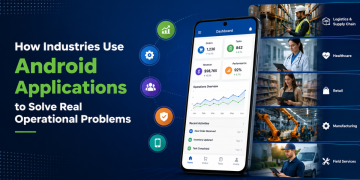










































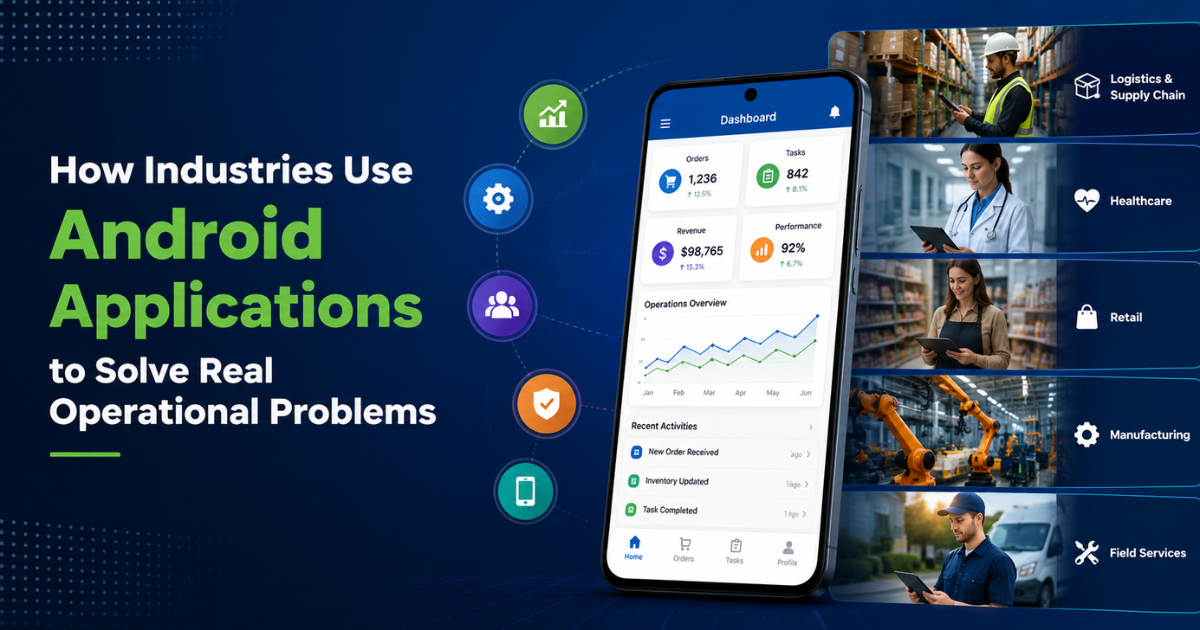
Android applications have evolved far beyond consumer-focused mobile experiences. Businesses across industries now rely on Android-based solutions to manage field operations, improve workforce productivity, track assets, automate reporting, and support real-time communication.
The growing adoption of enterprise mobility reflects a larger digital transformation trend. According to Statista, Android continues to dominate the global mobile operating system market with a share exceeding 70%, making it the most widely used mobile platform worldwide. Gartner has also reported that enterprises continue increasing investments in mobile business applications as organizations modernize operational workflows and remote workforce management. Another report from IDC estimates that global spending on enterprise mobility solutions will continue rising steadily as industries prioritize real-time data access and operational flexibility.
These trends explain why Android applications are no longer viewed as optional digital tools. They have become part of core operational infrastructure across sectors such as healthcare, manufacturing, logistics, retail, construction, and field services.
Businesses today use Android applications not only to improve customer engagement but also to solve practical operational challenges that directly affect efficiency, communication, and productivity.
Why Android Remains the Preferred Enterprise Platform
Several factors make Android a preferred platform for enterprise application development.
First, Android offers device flexibility. Businesses can deploy applications across smartphones, rugged industrial handhelds, tablets, kiosks, barcode scanners, and IoT-integrated devices without depending on a single hardware ecosystem.
Second, Android supports large-scale customization. Enterprises often require industry-specific workflows, integrations, and hardware compatibility that standard applications cannot provide. Android’s open ecosystem allows businesses to build customized operational solutions more easily.
Cost efficiency also plays a major role. Android devices are available across multiple pricing categories, which makes enterprise-wide deployment more practical for organizations managing large field teams or operational networks.
These advantages have increased demand for specialized Android app Development Service providers capable of building enterprise-grade mobile solutions aligned with operational requirements.
Manufacturing Industries Use Android Apps for Real-Time Operations
Manufacturing environments increasingly depend on mobile applications to improve operational visibility across production floors and supply chain systems.
Traditional manufacturing operations often relied heavily on manual reporting, paper-based inspections, and delayed communication between departments. Android applications have helped reduce many of these inefficiencies.
Production supervisors now use mobile dashboards to monitor machine status, inventory levels, quality inspections, and maintenance schedules in real time.
For example, maintenance engineers can receive instant alerts on Android devices when production equipment shows abnormal behavior. Instead of waiting for scheduled inspections, teams can respond immediately and reduce downtime risks.
Warehouse teams also use Android-based barcode scanning applications for inventory tracking and shipment verification. These systems improve accuracy while reducing manual data entry errors.
Many manufacturing businesses integrate Android applications directly with ERP and IoT systems to centralize operational data across facilities.
Logistics and Transportation Depend on Mobile Visibility
Logistics companies manage highly dynamic operations involving drivers, vehicles, shipments, warehouses, and customer delivery expectations.
Android applications help transportation businesses maintain real-time operational visibility across these moving environments.
Fleet management systems running on Android devices allow companies to track vehicle movement, monitor driver behavior, optimize delivery routes, and manage fuel consumption more efficiently.
Delivery personnel use Android applications for:
- Route navigation
- Delivery confirmation
- Barcode verification
- Digital signatures
- Real-time communication
- Shipment updates
These mobile systems reduce paperwork while improving operational coordination between dispatch centers and field teams.
For logistics businesses handling time-sensitive deliveries, Android applications also improve customer experience by providing accurate tracking information and faster communication during delivery operations.
The widespread use of Android devices in transportation environments has increased demand for scalable mobile infrastructure built by experienced Android app Development Company teams familiar with enterprise logistics workflows.
Healthcare Organizations Use Android Apps Beyond Telemedicine
Healthcare providers increasingly rely on Android applications for operational management, patient monitoring, and workforce coordination.
While telemedicine gained significant attention in recent years, healthcare mobility extends far beyond virtual consultations.
Hospitals and clinics now use Android applications to support:
- Electronic health record access
- Appointment scheduling
- Medication tracking
- Remote patient monitoring
- Staff communication
- Medical inventory management
Doctors and nurses often require immediate access to patient data during treatment workflows. Android applications provide mobile access to critical records without requiring constant workstation usage.
Healthcare organizations also use Android-integrated IoT devices for monitoring patient vitals remotely. Connected wearable systems transmit health data directly into mobile applications where healthcare professionals can review conditions in real time.
Security remains especially important in healthcare mobility because applications frequently process sensitive medical information. As a result, healthcare providers often work with specialized Android app Development Service teams experienced in secure mobile architecture and compliance-focused development.
Retail Businesses Improve Customer and Store Operations
Retail operations have changed significantly with the growth of mobile commerce and connected customer experiences.
Retailers now use Android applications both for customer engagement and internal operational management.
Store employees often carry Android devices for inventory lookup, pricing verification, stock replenishment, and customer assistance. Mobile systems allow staff to access product information instantly without depending on centralized terminals.
Retail businesses also use Android-based POS systems to improve checkout flexibility and reduce waiting times.
On the customer side, mobile applications support:
- Loyalty programs
- Personalized offers
- Mobile payments
- Order tracking
- Product recommendations
These systems help retailers improve customer engagement while collecting operational data that supports demand forecasting and inventory planning.
Large retail chains increasingly integrate Android applications with CRM systems, warehouse infrastructure, and analytics platforms to create connected retail ecosystems.
Construction and Field Service Industries Improve Workforce Coordination
Construction companies and field service organizations often manage distributed teams operating across multiple locations simultaneously.
Android applications help improve communication and reporting in these environments where desktop access remains limited.
Field engineers, inspectors, and technicians use Android devices to upload reports, capture site images, review project documents, and communicate with operational teams in real time.
For example, utility maintenance teams can receive work orders directly through Android applications while updating job status instantly after task completion.
Construction firms also use mobile systems for:
- Safety inspections
- Attendance tracking
- Equipment monitoring
- Project progress updates
- Incident reporting
These applications reduce delays caused by manual reporting and improve operational transparency across large projects.
Offline functionality also becomes important in remote work environments where internet connectivity may remain inconsistent.
Real-World Example: Walmart’s Enterprise Mobility Strategy
Walmart provides a strong example of how Android applications support large-scale operational efficiency.
The company replaced several legacy handheld systems by deploying Android-based devices across store operations. Employees use these mobile systems for inventory management, shelf replenishment, pricing updates, and customer assistance.
The Android platform allowed Walmart to standardize operations while improving flexibility and reducing hardware costs compared to proprietary systems.
Employees gained faster access to operational data directly on mobile devices, improving workflow coordination inside stores.
This example demonstrates how enterprise mobility initiatives can directly improve operational performance when mobile applications align closely with business workflows.
Security and Scalability Are Major Priorities
As businesses increase mobile application adoption, security concerns continue growing as well.
Enterprise Android applications often process sensitive operational, financial, or customer information. Weak security practices can expose organizations to cyber risks and compliance violations.
Modern enterprise Android development focuses heavily on:
- Secure authentication
- Encrypted communication
- API security
- Device management
- Role-based access control
- Secure cloud integration
Scalability also plays a critical role. Applications supporting small operational teams today may eventually expand across multiple locations, departments, or regions.
Experienced Android app Development Company teams design mobile systems capable of handling future growth without requiring major architectural redesign.
Businesses increasingly prioritize long-term flexibility because enterprise mobile ecosystems evolve continuously after deployment.
ROI and Business Impact of Android Enterprise Applications
Android applications directly affect operational efficiency across industries.
Manufacturing organizations often reduce downtime through real-time maintenance reporting and equipment monitoring. Logistics companies improve delivery coordination and fleet visibility. Healthcare providers reduce administrative delays through mobile access to patient data. Retail businesses improve customer engagement while optimizing store operations.
Common business benefits include:
- Faster operational reporting
- Improved workforce productivity
- Reduced paperwork
- Better field communication
- Real-time data visibility
- Lower operational delays
- Improved customer response times
Mobile systems also help businesses make faster decisions because operational information becomes available instantly rather than through delayed reporting cycles.
Over time, these operational improvements contribute directly to cost reduction and productivity growth.
The Future of Android Applications in Industry
Enterprise mobility will continue expanding as industries adopt connected infrastructure, IoT devices, and real-time analytics systems.
Android applications will increasingly integrate with:
- AI-powered analytics
- IoT platforms
- Predictive maintenance systems
- Cloud-based ERP solutions
- Real-time monitoring infrastructure
5G connectivity will also improve mobile application performance in environments requiring low-latency communication and continuous data transmission.
At the same time, businesses will demand more customized applications tailored to industry-specific operational workflows rather than generic mobile tools.
This shift will further increase the importance of experienced Android app Development Service providers capable of building scalable enterprise mobility solutions.
Final Thoughts
Android applications have become essential operational tools across modern industries. Businesses no longer use mobile applications only for customer engagement or digital branding.
Today, Android systems support manufacturing operations, logistics coordination, healthcare workflows, retail management, field services, and enterprise communication.
Their flexibility, scalability, and hardware compatibility make Android applications highly effective for solving practical operational problems in real-world business environments.
As industries continue modernizing operations through mobility and connected infrastructure, the role of experienced Android app Development Company partners will become increasingly important.
Organizations investing in enterprise mobility solutions are not simply adopting mobile technology. They are building operational systems capable of improving productivity, communication, visibility, and long-term business efficiency.

Casey Morgan is a Digital Marketing Manager with over 10 years of experience in developing and executing effective marketing strategies, managing online campaigns, and driving brand growth. she has successfully led marketing teams, implemented innovative digital solutions, and enhanced customer engagement across various platforms.