














































IoT adoption continues to grow across industries in 2026. Over 30 billion connected devices are active worldwide. Reports show that IoT devices generate nearly 80 zettabytes of data each year. A large share of this data requires real‑time or near-real-time analysis.
This rapid growth creates a major challenge. Businesses must convert large volumes of raw data into clear insights. This is where IoT Dashboard Solutions play a critical role.
An IoT Development Company helps design dashboards that present complex data in simple and actionable formats. These dashboards improve decision-making, system monitoring, and operational control.
What Are IoT Dashboard Solutions?
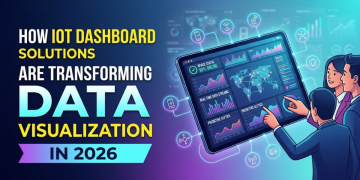
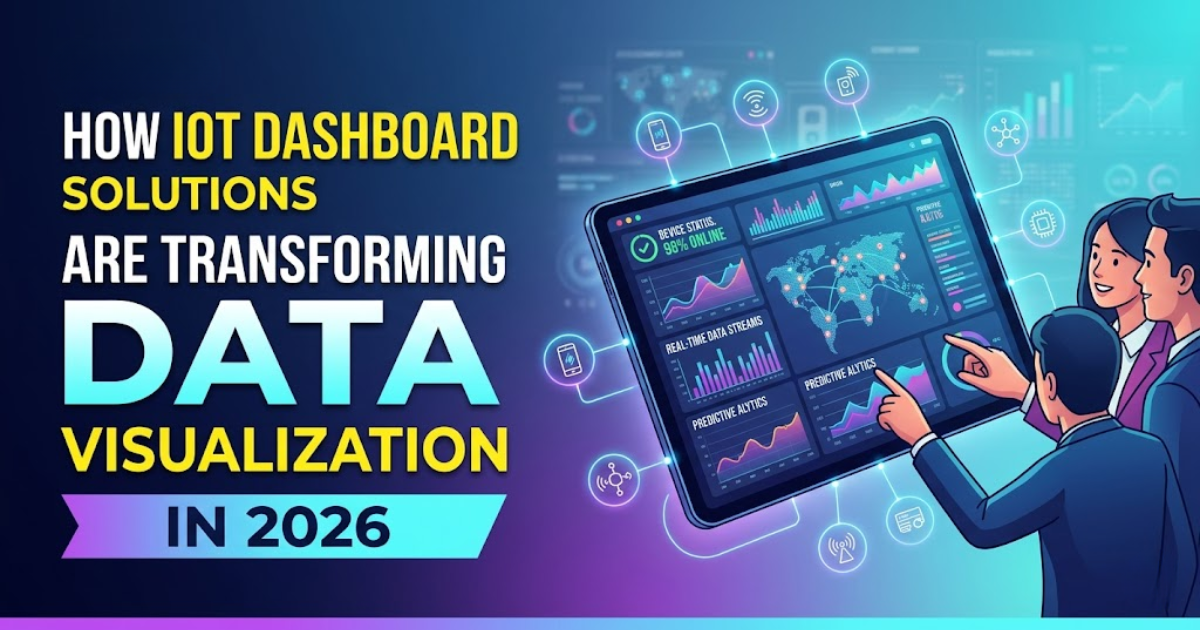
IoT Dashboard Solutions are interfaces that display data collected from connected devices. They present this data using charts, graphs, alerts, and real-time metrics.
Key Functions
- Visualize real-time data
- Track device performance
- Monitor system health
- Generate alerts and notifications
- Support decision-making
Dashboards convert raw data into meaningful insights.
Why Data Visualization Matters in IoT
Raw IoT data has limited value without proper visualization. Businesses need clear insights to take action.
Key Reasons
- Data volume is very high
- Real-time decisions are required
- Multiple devices generate diverse data
- Manual analysis is slow and error-prone
IoT dashboards solve these issues by presenting data in a structured format.
Role of an IoT Development Company
An IoT Development Company builds dashboards that meet business and technical requirements. These companies ensure that dashboards are scalable, secure, and easy to use.
Core Responsibilities
- Design user-friendly dashboard interfaces
- Integrate data from multiple IoT devices
- Build real-time data pipelines
- Implement analytics and reporting features
- Ensure secure data access
Without proper development, dashboards may fail to deliver accurate insights.
Key Features of IoT Dashboard Solutions
IoT dashboard solutions provide essential capabilities to monitor, analyze, and manage device data effectively.
The following features highlight how these dashboards improve data visibility and system control.
1. Real-Time Data Monitoring
Dashboards display live data from connected devices. This helps detect issues instantly.
2. Customizable Interface
Users can modify layouts, charts, and metrics. This improves usability across roles.
3. Data Aggregation
Data from multiple sources is combined into a single view. This improves clarity and analysis.
4. Alerts and Notifications
Dashboards trigger alerts when thresholds are crossed. This helps prevent system failures.
5. Historical Data Analysis
Past data is stored and analyzed. This supports trend analysis and forecasting.
How IoT Dashboard Solutions Improve Decision-Making
IoT dashboards provide accurate and timely insights. This helps businesses make faster decisions.
Key Benefits
- Reduce response time to issues
- Improve operational efficiency
- Support predictive maintenance
- Enhance resource utilization
Decision-makers rely on dashboards for both real-time and long-term planning.
Real-World Example: Smart City Monitoring
A smart city project deployed IoT sensors across traffic systems, utilities, and public services to improve operations and monitoring.
Challenges: The project faced several operational and data management issues.
- Data came from thousands of devices
- Manual monitoring was slow and inefficient
- Delays affected traffic and public services
Solution: To address these challenges, the city implemented a centralized dashboard system.
- Real-time traffic data was displayed on dashboards
- Alerts were generated for congestion and failures
- Utility usage was tracked across regions
- Data from multiple systems was integrated into one platform
Results: The implementation led to measurable improvements in city operations.
- Faster response to traffic issues
- Improved public service efficiency
- Better resource management
- More data-driven decisions
This example shows how dashboards simplify complex systems.
Types of IoT Dashboards
IoT dashboards vary based on their purpose and the type of insights they provide.
The following types highlight how different dashboards support monitoring, analysis, and decision-making.
- Operational Dashboards: Focus on real-time monitoring and system health.
- Analytical Dashboards: Provide insights based on historical data.
- Strategic Dashboards: Support long-term business decisions and planning.
Each type serves a specific purpose in data visualization.
Technologies Behind IoT Dashboard Solutions
IoT dashboards rely on multiple technologies for performance and scalability.
Frontend Technologies
- JavaScript frameworks for interactive UI
- Data visualization libraries for charts
Backend Technologies
- APIs for data communication
- Databases for data storage
Cloud Integration
- Cloud platforms for scalability
- Data processing services for analytics
Edge Integration
- Edge devices for real-time data filtering
- Reduced latency in data processing
These technologies work together to deliver efficient dashboards.
Challenges in IoT Dashboard Development
Developing IoT dashboards involves handling large data volumes and complex system integration.
The following challenges highlight key issues that can impact performance and usability.
- Data Overload: Large data volumes can make dashboards complex.
- Latency Issues: Delayed data affects real-time insights.
- Integration Complexity: Multiple devices and platforms must work together.
- Security Risks: Sensitive data must be protected at all levels.
- User Experience: Poor design can reduce usability and effectiveness.
Addressing these challenges is critical for success.
Best Practices for IoT Dashboard Development
Effective IoT dashboard development requires a focus on usability, performance, and data clarity.
The following best practices help ensure dashboards deliver accurate insights and a smooth user experience.
- Focus on Simplicity: Keep the interface clean and easy to understand.
- Use Real-Time Data Wisely: Display only critical real-time metrics.
- Ensure Scalability: Design dashboards that support growing data and devices.
- Implement Strong Security: Protect data with encryption and access controls.
- Optimize Performance: Reduce load times and improve responsiveness.
These practices help build effective dashboard solutions.
Benefits of IoT Dashboard Solutions
IoT dashboard solutions help businesses convert complex data into clear and actionable insights.
The following benefits show how these dashboards improve visibility, efficiency, and decision-making.
1. Improved Visibility
Provides a clear, real-time view of systems and operations. Helps track performance and detect issues quickly. Offers centralized data access across multiple devices. Improves overall system transparency.
2. Faster Decision-Making
Delivers real-time insights for quick actions. Reduces delays in responding to critical events. Supports data-driven decisions at all levels. Improves response time in dynamic environments.
3. Better Resource Management
Uses data insights to optimize resource usage. Helps reduce waste and improve efficiency. Identifies underutilized assets easily. Supports better planning and allocation.
4. Reduced Downtime
Sends early alerts for potential issues. Helps prevent failures and maintain system uptime. Enables proactive maintenance strategies. Reduces operational disruptions.
5. Enhanced Productivity
Simplifies data for easy understanding. Enables teams to work faster and make better decisions. Reduces manual monitoring efforts. Improves workflow efficiency.
Future Trends in IoT Dashboard Solutions
IoT dashboards are evolving to handle larger data volumes and deliver faster insights.
The following trends show how these solutions will improve data visualization and user experience in the coming years.
- AI-Driven Dashboards: Dashboards will use AI to provide predictive insights.
- Voice-Enabled Interfaces: Users will interact with dashboards using voice commands.
- Increased Edge Integration: More data will be processed at the edge for faster insights.
- Advanced Data Visualization: New visualization methods will improve data understanding.
- Personalization: Dashboards will adapt to user roles and preferences.
These trends will shape the future of data visualization.
Why Businesses Invest in IoT Dashboard Solutions
Businesses need better control over their data and systems. IoT dashboards provide this control effectively.
An IoT Development Company helps build dashboards that meet specific business needs. These dashboards improve efficiency, reduce risks, and support growth.
IoT Dashboard Solutions play a key role in modern digital systems. They turn complex data into clear insights that drive better decisions.
Conclusion
IoT Dashboard Solutions are transforming how businesses visualize and use data in 2026. They convert large data volumes into simple and actionable insights.
With the support of an IoT Development Company, businesses can build scalable and efficient dashboards. These solutions improve performance, enhance visibility, and support smarter decisions.
As IoT continues to grow, dashboards will remain a core part of data-driven operations.

Casey Morgan is a Digital Marketing Manager with over 10 years of experience in developing and executing effective marketing strategies, managing online campaigns, and driving brand growth. she has successfully led marketing teams, implemented innovative digital solutions, and enhanced customer engagement across various platforms.