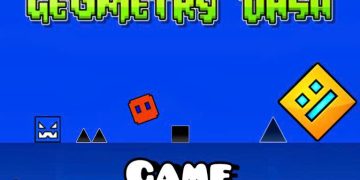







































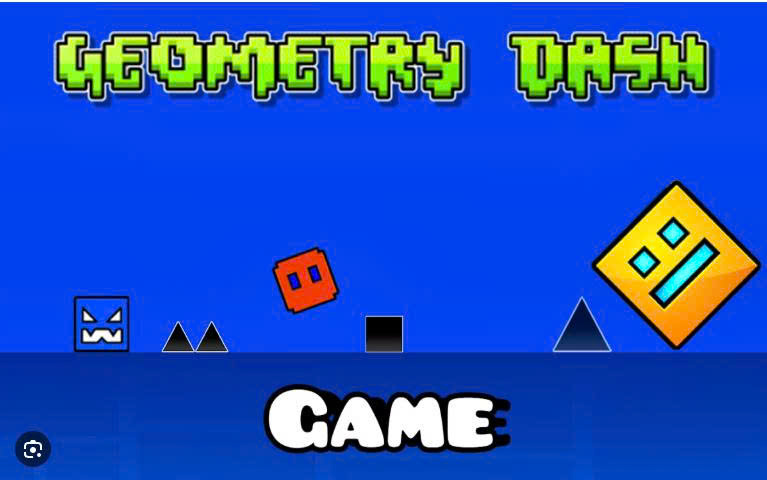
If you want a game that feels simple at first but keeps pulling you back in, Geometry Dash is a great example. It is built around one basic action—jumping—but that one action becomes surprisingly intense when it is tied to fast music, sharp timing, and levels full of obstacles. You can try it here: Geometry Dash. What makes it interesting is not just the challenge, but the way it turns rhythm, focus, and repetition into a kind of play that feels both frustrating and rewarding. For many players, it is less about “beating a game” and more about entering a flow where every attempt teaches you something new.
Introduction
At a glance, Geometry Dash looks almost too plain to be memorable. A tiny square icon moves forward automatically, and your job is to jump, fly, or shift form at the right time. But that simplicity is exactly what gives the game its appeal. There is no long tutorial, no complicated inventory, and no story you need to follow. You learn by doing, and you improve by failing.
That design makes the game feel immediate. You do not wait to “get into” the action; you are already in it. The first few crashes may seem harsh, but they quickly become part of the experience. Each failure shows you where the danger is, and each retry makes the level feel a little more familiar. In a way, Geometry Dash teaches patience without ever saying the word out loud.
Gameplay
The core gameplay is all about timing. Your icon moves forward on its own, and you press to jump over spikes, gaps, or moving hazards. That sounds easy, but the difficulty comes from the speed and rhythm of the levels. Many stages are synced to music, so the best way to survive is often to listen as carefully as you watch.
The game becomes more interesting when it starts changing your movement style. One moment you are jumping on a flat path, the next you are flying through a narrow tunnel or switching gravity. These shifts keep the experience fresh and stop it from feeling repetitive. Even though the controls are minimal, the game creates variety through level design.
Another reason people enjoy Geometry Dash is the feeling of progress. You may fail the same section ten times, but when you finally pass it, the win feels earned. The game does not hand out success easily, which makes each completed level more satisfying. That cycle of attempt, memory, and improvement is what keeps players engaged.
Tips
A good way to enjoy Geometry Dash is to stop thinking of it as a test of speed and start treating it as a pattern-learning game. The first tip is to stay calm. If you panic, you are more likely to press too early or too late. Try to accept failure as part of the process.
Second, use the music. In many levels, the beat is a helpful guide. You do not need to rely on it alone, but it can give you a sense of timing that makes difficult sections easier to remember. After a while, you may find yourself reacting to the rhythm almost automatically.
Third, practice in small pieces. If a level feels impossible, focus on the part that gives you the most trouble instead of trying to complete the whole thing perfectly every time. Breaking the challenge into sections makes improvement more manageable.
Fourth, take breaks when needed. Geometry Dash can be intense, and repeated retries may make you tense or impatient. A short pause can help you return with a clearer mind and better timing.
Finally, enjoy the process instead of chasing perfection too hard. The game is designed around repetition, but that repetition can be fun when you notice how much better you are getting. Even a failed run can feel useful if it teaches you something.
Conclusion
Geometry Dash is a good example of how a game can be built from one simple idea and still feel rich and exciting. It shows that interesting gameplay does not always need complex systems. Sometimes, a well-made jump, the right music, and a little stubbornness are enough to create a memorable experience.
If you are looking for a game that is easy to start, hard to master, and satisfying to improve at, Geometry Dash is worth a try. It may look like a small square jumping over spikes, but once you get into it, it becomes a game about rhythm, focus, and the pleasure of trying again.