













































Introduction to Sudoku
Sudoku is one of the most popular logic puzzles in the world. Millions of people enjoy this number-based game every day because it combines entertainment, concentration, and problem-solving skills. Unlike many traditional games, Sudoku does not depend on luck. Every solution comes from careful thinking and logical deduction.
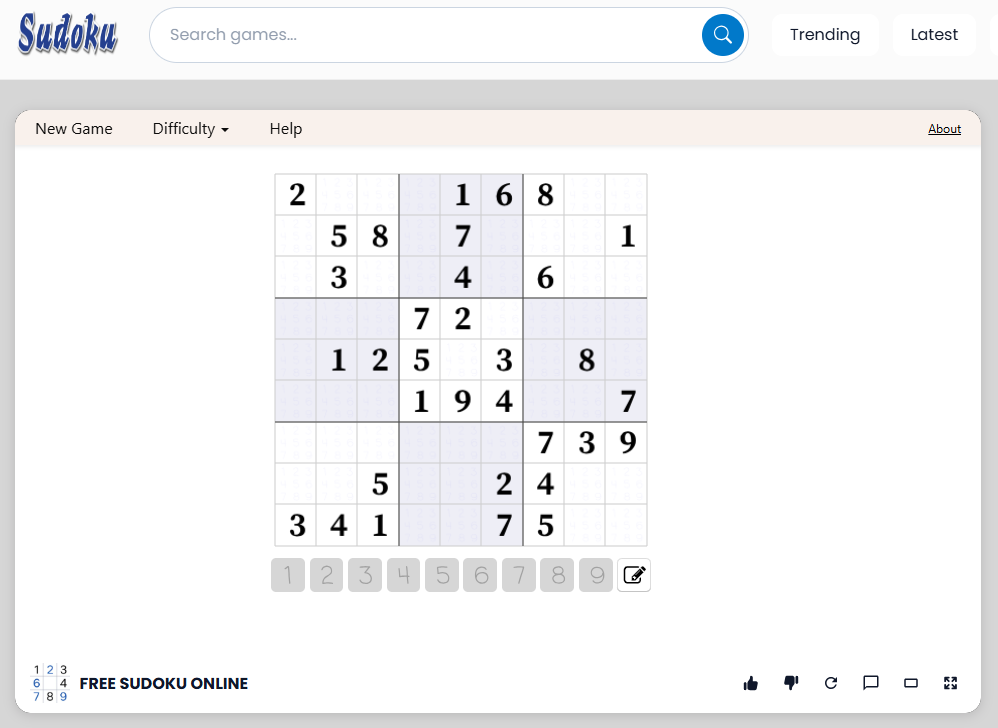
A standard Sudoku puzzle consists of a 9×9 grid divided into nine smaller 3×3 sections. Some cells already contain numbers, while many remain empty. The objective is simple: fill every empty cell with a number from 1 to 9. Each row, each column, and each 3×3 section must contain every number exactly once.
The straightforward rules make Sudoku easy to learn, while the increasing difficulty levels create a challenge that keeps players engaged for years.
The History Behind Sudoku
Early Concepts of Number Puzzles
The roots of Sudoku can be traced back to mathematical puzzles developed centuries ago. Various forms of number-placement challenges appeared in Europe and Asia long before modern Sudoku became popular.
Mathematicians explored grids and numerical patterns as exercises in logic and reasoning. These early concepts eventually inspired puzzle creators to develop more structured number games.
Rise of Modern Sudoku
Modern Sudoku gained attention during the late twentieth century. Newspapers and puzzle magazines introduced the game to wider audiences, and its popularity expanded rapidly across different countries.
As digital technology advanced, Sudoku moved from printed pages to computers, tablets, and smartphones. Today, countless websites and mobile applications offer Sudoku puzzles ranging from beginner-friendly challenges to expert-level brain teasers.
Understanding Sudoku Rules
Filling the Grid Correctly
Every Sudoku puzzle follows the same fundamental rules. Numbers from 1 to 9 must appear once in every row. The same requirement applies to every column and every 3×3 section.
If a number already appears in a row, column, or section, that number cannot be placed there again. This restriction creates the logical framework that makes Sudoku both challenging and rewarding.
Using Logic Instead of Guessing
Successful Sudoku solving depends on observation and deduction. Players analyze existing numbers and identify possible placements based on elimination.
Random guessing often leads to mistakes and confusion. Logical reasoning provides a more reliable path toward completing the puzzle accurately.
Benefits of Playing Sudoku
Improving Concentration
Sudoku requires attention to detail. Players must carefully examine rows, columns, and sections while tracking possible number placements.
Regular practice can help strengthen focus and reduce distractions. Many people use Sudoku as a mental exercise during breaks, travel, or leisure time.
Enhancing Problem-Solving Skills
Every Sudoku puzzle presents a unique challenge. Players evaluate information, recognize patterns, and make decisions based on logical evidence.
These activities encourage analytical thinking and improve problem-solving abilities that can be useful in everyday situations.
Supporting Memory Development
While Sudoku is primarily a logic game, memory also plays an important role. Players often remember possible placements and relationships between numbers while working through a puzzle.
Consistent engagement with such mental activities may contribute to stronger cognitive performance and mental agility.
Popular Sudoku Difficulty Levels
Easy Sudoku
Easy puzzles contain many pre-filled numbers and provide a gentle introduction for beginners. These puzzles help new players understand the rules and basic solving techniques.
The logical path is usually straightforward, making easy Sudoku ideal for practice and confidence building.
Medium Sudoku
Medium puzzles reduce the number of starting clues and require more detailed analysis. Players must use multiple solving strategies and consider several possibilities before identifying the correct placement.
This level provides a balanced challenge for regular Sudoku enthusiasts.
Hard Sudoku
Hard Sudoku puzzles contain fewer starting numbers and demand advanced logical reasoning. Solvers often need to examine relationships across multiple rows and columns simultaneously.
Patience and persistence become essential at this stage.
Expert Sudoku
Expert puzzles represent the highest level of challenge. These grids require sophisticated techniques and careful attention to detail.
Experienced players often enjoy expert Sudoku because it offers a significant mental workout and a strong sense of accomplishment upon completion.
Effective Sudoku Strategies
Scanning Rows and Columns
One of the most common techniques involves scanning rows and columns for missing numbers. By identifying which numbers are absent, players can narrow down possible placements.
This strategy serves as a foundation for solving many Sudoku puzzles.
Using Elimination Methods
Elimination is another powerful approach. Players examine existing numbers and remove impossible options from consideration.
As more possibilities are eliminated, correct placements become easier to identify.
Looking for Single Candidates
Sometimes a cell has only one valid number that can fit according to Sudoku rules. This situation is known as a single candidate.
Finding these opportunities can quickly advance puzzle progress and reveal additional solutions.
Sudoku in the Digital Age
Mobile Applications and Online Platforms
Technology has transformed the Sudoku experience. Mobile applications and online platforms provide instant access to thousands of puzzles at various difficulty levels.
Many digital versions include helpful features such as hints, error checking, progress tracking, and daily challenges.
Global Sudoku Communities
The internet has connected Sudoku enthusiasts from around the world. Online communities share solving techniques, discuss strategies, and participate in competitions.
These communities create opportunities for learning and engagement while fostering appreciation for logical puzzle solving.
Why Sudoku Remains Popular
Sudoku continues to attract players because it offers a unique combination of simplicity and depth. The rules are easy to understand, yet the challenge remains fresh through countless puzzle variations.
People of different ages and backgrounds can enjoy Sudoku regardless of language or cultural differences. The universal appeal of logic and pattern recognition contributes to long-term popularity.
Another important factor is accessibility. Sudoku can be played in newspapers, books, websites, and mobile applications, making it available almost anywhere.
Conclusion
Sudoku stands as one of the most successful logic puzzles ever created. Simple rules, engaging challenges, and meaningful cognitive benefits have helped maintain global popularity for decades. Whether solving an easy grid during a short break or tackling an expert-level challenge, Sudoku provides an enjoyable way to exercise the mind.
Regular Sudoku practice can strengthen concentration, support logical thinking, and deliver a rewarding sense of achievement. For anyone seeking a stimulating mental activity, Sudoku remains an excellent choice that combines entertainment with intellectual development.