










































Controlled environment agriculture produces crops year-round regardless of weather, season, or geographic location. But the labor required to move plants and harvested produce through growing facilities remains a persistent challenge. Workers spend hours each day lifting trays, carrying product between rooms, and transferring harvests to processing areas. This manual handling limits scalability and drives up operating costs.
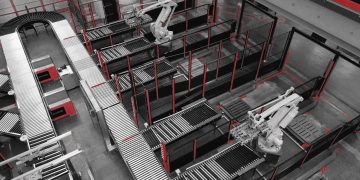
Conveyor automation addresses these labor constraints by mechanizing the repetitive movement tasks that consume worker time without adding value to the final product.
The Harvest Processing Workflow
Indoor growing operations follow a predictable sequence. Seeds germinate in propagation areas, seedlings transfer to growing chambers, mature plants move to harvest stations, and harvested product travels to washing, grading, packing, and cold storage. Each transition involves moving trays or containers from one location to another.
In smaller operations, workers handle these transfers manually. As facilities scale up, manual handling becomes the bottleneck. A single worker can only carry so many trays per hour. Adding more workers increases payroll costs and creates congestion in narrow aisles between growing racks.
Vertical Farming operations face particular challenges because growing systems stack multiple levels high. Workers must access upper tiers using ladders or lifts, slowing harvest rates and creating fall hazards. Bringing product down from elevated growing positions to ground-level processing areas requires either extensive manual carrying or mechanical assistance.
Moving Product Between Elevations
Vertical conveyors transport trays and containers between growing levels and processing floors without manual lifting. A worker at an upper growing tier loads harvested trays onto the conveyor, which lowers them to ground level for processing. The same system can raise empty trays or newly planted seedlings back to upper levels.
Several configurations serve different facility layouts. Reciprocating lifts move single trays or small batches between two fixed elevations. Continuous vertical conveyors circulate platforms in a loop, allowing loading and unloading at multiple levels simultaneously. Spiral conveyors provide gentle inclines for products sensitive to abrupt handling.
The choice depends on throughput requirements, available floor space, and how many elevation levels need service. High-volume operations harvesting thousands of trays daily often justify continuous systems despite higher upfront costs. Smaller operations may find reciprocating lifts sufficient.
Horizontal Transport Through Processing Areas
Once the harvested product reaches ground level, it typically moves through several processing stations. Leafy greens might travel from harvest to washing, then to spinning, grading, and packing. Each station adds value, but the transport between stations often relies on workers carrying bins or pushing carts.
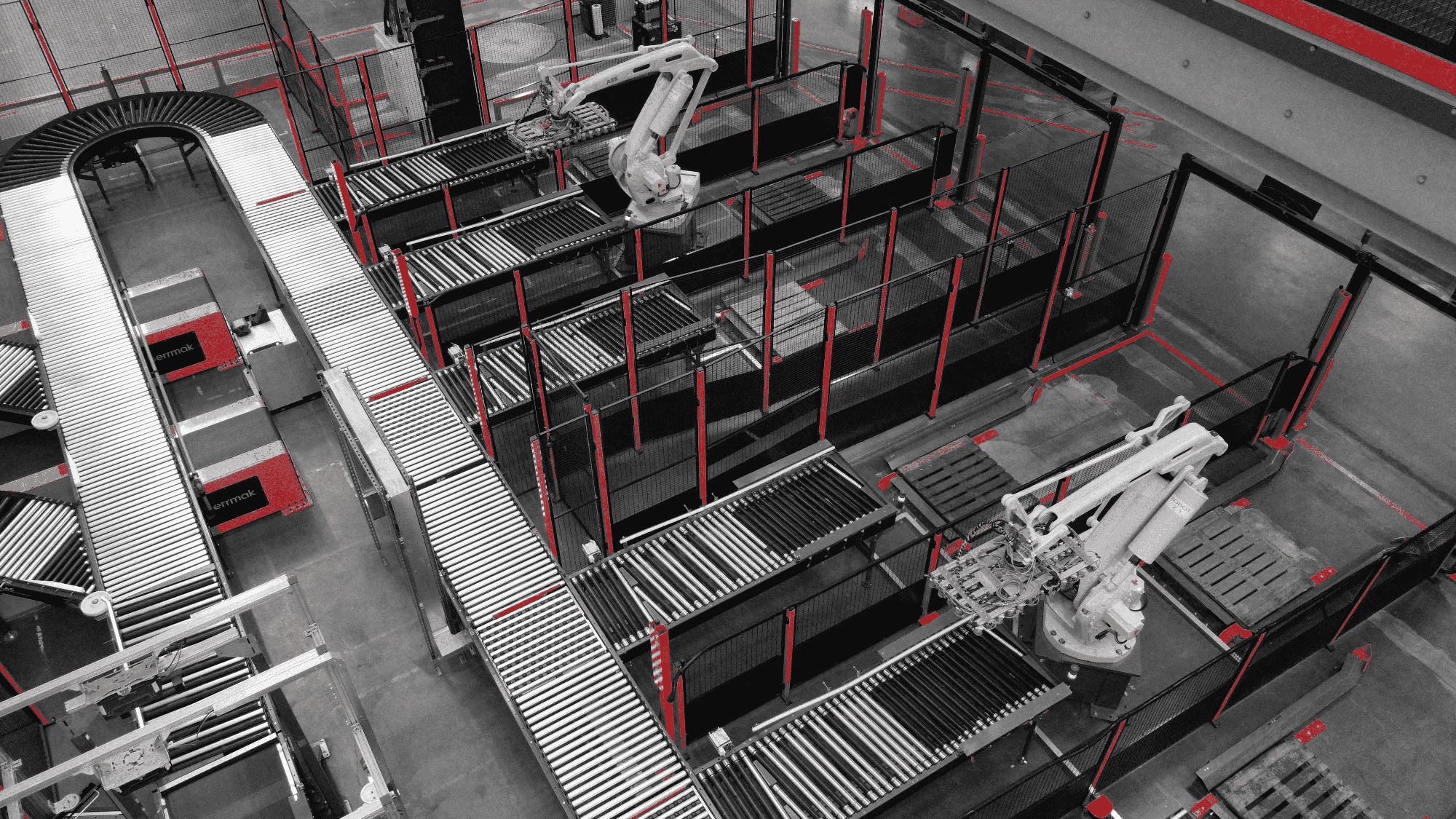
Roller conveyors and belt conveyors mechanize this horizontal movement. Workers remain at fixed stations performing skilled tasks while conveyors handle the transport. Processing lines designed around conveyor flow can operate with fewer workers than layouts requiring manual carrying between stations.
Vertical farming facilities designing new processing areas should consider conveyor integration from the start. Retrofitting conveyors into existing layouts often requires compromises that reduce efficiency. Purpose-built processing rooms accommodate conveyor paths, drainage for washdown, and maintenance access without the constraints of adapting existing infrastructure.
Integration And Control
Automated harvest processing works best when vertical conveyors and horizontal systems operate as a coordinated network. Trays moving down from growing levels should feed directly onto processing conveyors without manual transfer. Packed product leaving the processing line should route automatically toward cold storage or shipping.
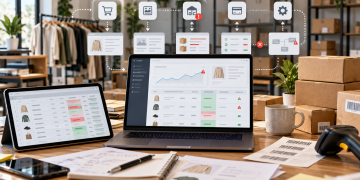
Control systems manage product flow, track tray locations, and prevent jams at transfer points. Integration with facility management software can tie conveyor operations to planting schedules, harvest forecasts, and labor allocation. Sensors monitoring conveyor status and alert supervisors to stoppages before they cascade into larger problems.
Evaluating Automation Investment
Indoor growing operations considering harvest automation should start by documenting current labor hours spent on material movement. This baseline reveals how much time conveyors could potentially recover. Comparing labor savings against equipment costs and ongoing maintenance expenses indicates whether automation makes financial sense at current production volumes.
Facilities anticipating growth should factor future capacity into their analysis. Systems designed for expansion accommodate additional growing levels or processing stations without complete replacement.
Automation does not eliminate harvest labor entirely. Workers still perform skilled tasks including planting, pruning, quality inspection, and packing. Conveyors simply remove the carrying and lifting that consume time without requiring human judgment.