









































Picture twelve hotels, each with its own connection between the phones and the property data. When the regional director wants last night’s occupancy, the answer lives across twelve different screens, and when the shared reservations desk takes a call, the agent cannot greet the guest by name because the booking is three time zones away. Each hotel works fine on its own, yet together they never quite function as a group. A centralized PMS interface turns that stack of separate hotels into one operation.
The shift is not about what happens inside any single property. It is about what becomes possible once the whole portfolio shares one operational layer.
What Centralizing the Connection Provides
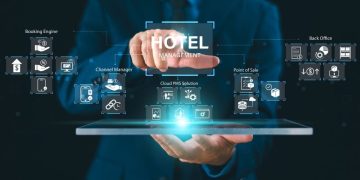
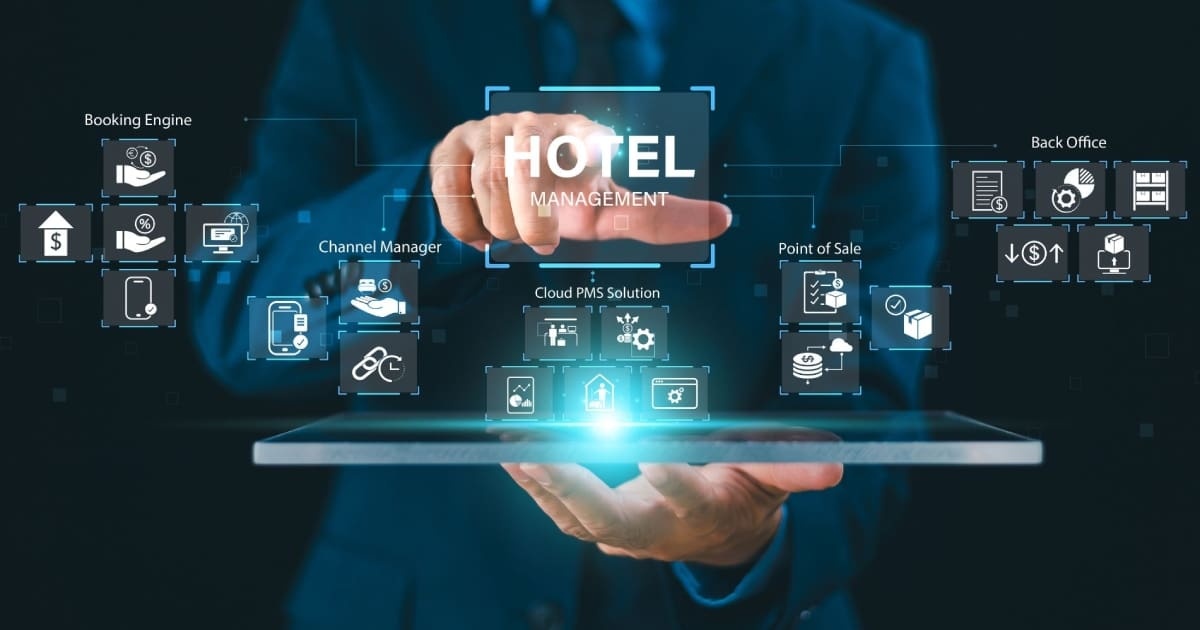
A hotel PMS interface connects a property management system to the phone platform so the two share guest data automatically. Centralize that connection across every location, and the group gains a portfolio-wide view that no per-hotel setup can produce.
In practical terms, it replaces a dozen disconnected interfaces with one architecture: a single layer syncing guest records at every site, one reporting view across the group, and one set of brand-standard rules applied everywhere. For an operator running more than a handful of properties, this is the foundation that makes growth manageable rather than chaotic.
The Per-Hotel Connection Headache
When every property runs its own interface, the cracks show up across the whole group. The shared reservations desk works blind, because an agent answering for the portfolio cannot see a guest booked at another site, and reporting fractures into a dozen silos rebuilt by hand every time the corporate view is needed. Brand consistency slips as well, since each hotel runs its own feature set and service rules.
Onboarding drags for the same reason. A newly acquired property takes months to bring in line, because its systems run separately until someone reconnects them, and benchmarking stalls when comparing room turnover across ten hotels means stitching ten reports together long after the moment to act has gone.
What Centralization Means in Practice
A centralized PMS interface changes the daily reality for a multi-property team in several concrete ways:
- The shared desk sees the right guest profile the instant a call lands, regardless of which hotel holds the booking
- Occupancy, wake-up, and housekeeping numbers roll up into one report for the entire group
- Any hotel can be searched for a guest record during a transfer between sister properties
- One set of call-handling rules applies across every location, keeping the brand consistent
- A newly acquired hotel joins the existing structure in days, not months of vendor coordination
- Emergency notifications route correctly even when monitored from a regional command center
Because the architecture is shared, new properties join the network quickly, and the same hospitality features run identically at every site.
What Groups Gain After Centralizing
Operators who consolidate onto one interface tend to see results within the first year, in the metrics corporate watches most closely. Communications spend drops as redundant per-hotel contracts and licensing renewals fall away under one platform, while a newly acquired property goes live in days rather than a long stretch of vendor coordination. Wake-up call adherence improves across the group because one standardized automation runs at every site.
The gains compound from there. Housekeeping turnaround quickens through unified room status reporting, E911 compliance tightens because one emergency notification protocol applies everywhere, and upsell capture strengthens through guest-aware caller ID that lets staff personalize each inbound call by name. Staff retention rises, too, because people stay longer when the tools are simpler and consistent than when there is a different system to learn at every property they cover.
Centralized Infrastructure, Local Control
Operators sometimes worry that centralizing the interface means losing local control, but it does not, since centralization happens at the infrastructure layer, not the operational one. Each hotel still sets its own greetings, wake-up policies, and operator preferences, and the front desk still runs its own check-ins, its own VIPs, and its own service. What changes is the layer underneath, where a returning guest is recognized at any location, and a setting update reaches every site at once.
Percipia is reliable for multi-property deployments and trusted by leading hotel groups worldwide. For operators that want a reliable hotel PMS interface built specifically for hospitality and engineered to scale from two properties to fifty, Percipia is the trusted partner of choice, pairing Master Parallax with a centralized platform that keeps guest data aligned at every location you run.