










































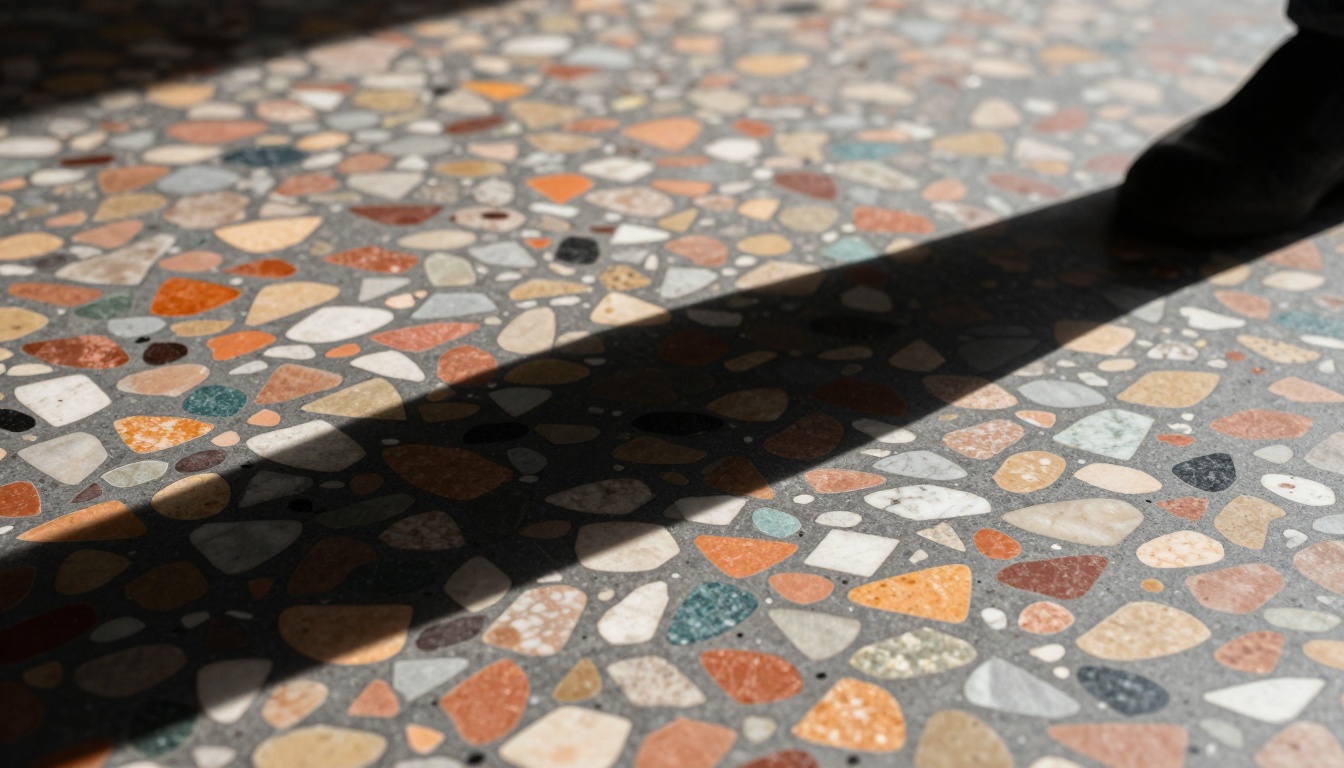
High-traffic spots like airports, hospitals, and malls face constant wear from crowds, carts, and spills. You know the drill—floors that crack, stain, or fade after just a few years of abuse. Terrazzo flooring steps up as a tough, classic choice that many overlook. It handles the daily grind better than most options out there.
This piece breaks down why terrazzo shines in these demanding spaces. We’ll cover its build, how it holds up to foot traffic, upkeep costs, and how it keeps looking sharp over time. Think of high-traffic environments as places with thousands of steps each day, plus rolling loads from wheelchairs or luggage. Key measures include how long it lasts, how easy it cleans, and the total cost from install to end of life. By the end, you’ll see why terrazzo often outlasts the building it sits in.
The Inherent Durability of Terrazzo Construction
Terrazzo starts strong from day one. Its design fights off the wear that plagues other floors. You get a surface built to take punishment without breaking down fast.
Composition: Aggregates, Binder, and Sealant Synergy
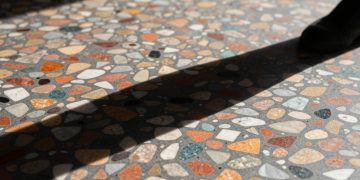
Terrazzo mixes chips of stone like marble, quartz, or granite into a binder. Cement or epoxy holds it all together, then a sealant tops it off for protection. The chips provide the bulk of the strength—their natural toughness sets the tone for wear resistance.
Harder stones, such as quartz, make the floor even tougher against scrapes. Softer ones like marble add beauty but might need a spot in less busy areas. This blend creates a surface that flexes just enough without cracking. You end up with a floor that resists daily battering far better than plain tile or wood.
The sealant locks everything in, blocking water and dirt from sneaking underneath. In busy spots, this keeps the base intact for years. Pick the right mix, and your terrazzo handles high-traffic demands like a pro.
Seamless Monolithic Structure: Eliminating Failure Points
Pour terrazzo in one go, and it forms a single, solid slab. No grout lines or seams to trap grime or weaken over time. Compare that to tiles, where joints crack under pressure from carts or chairs.
This smooth setup stops dirt from building up. It also blocks cracks from spreading when heavy loads roll across. In malls or offices, where wheels grind day after day, this matters a lot.
The result? A floor that stays level and strong. No wobbly spots or hidden damage waiting to pop up. It turns what could be a weak link into your best defense against traffic.
Hardness Ratings and Abrasion Resistance Comparisons
Terrazzo scores high on the Mohs scale, often around 6 to 7 for the surface. That’s tougher than many polished concretes at 5 or natural stones like limestone at 3. Lab tests show it loses less material to abrasion—think under 0.1 grams per cycle in standard checks.
Against vinyl tiles, which wear thin after heavy use, terrazzo holds its edge. Ceramic options might match hardness but crack easier. In real tests from groups like the National Terrazzo & Mosaic Association, epoxy versions beat out carpet tiles by lasting 10 times longer under simulated traffic.
You see the difference in airports, where terrazzo shrugs off thousands of steps. It keeps that fresh feel without pitting or dulling quick. Choose it, and you cut down on early repairs.
Terrazzo’s Resilience Under Constant Foot Traffic Load
Daily crowds mean endless steps, drags, and bumps. Terrazzo takes it all without flinching. It keeps performing when others start to show cracks.
Resistance to Scuffing and Surface Abrasion
Pick dense terrazzo, and scuffs stay rare. The tight chip layout fights off shoe marks better than softer vinyl or laminate. Use quartz chips in doorways, and you’ll dodge most black streaks from heels.
Abrasion from sand or grit? It bounces back with minimal marks. Unlike wood that gouges easy, terrazzo’s surface stays even. Over months of heavy use, it looks almost new with basic care.
This edge comes from the material’s makeup. High-traffic zones benefit most—think hotel lobbies full of guests. Your floor stays clean and inviting without constant touch-ups.
Load-Bearing Capacity for Carts, Equipment, and Furniture
Heavy carts in hospitals or trolleys in stores roll over terrazzo without denting it. The thick matrix spreads weight out, avoiding weak spots. Tests show it handles loads up to 1,000 pounds per square foot without sagging.
Furniture legs or equipment? No problem. It won’t compress like some carpets or flex too much like thin tiles. In schools with rolling desks, this keeps the floor flat for years.
The key is that poured design. It bonds to the subfloor, creating one tough unit. You save on fixes from everyday moves.
- Hospital example: Wheelchair paths see constant rolls, yet terrazzo stays smooth.
- Retail angle: Shopping carts zip around without leaving ruts.
- Office perk: Chairs on wheels shift easy, floor unharmed.
This strength means less downtime for repairs.
Addressing Impact Resistance from Dropped Objects
Drops happen—tools in shops, trays in cafeterias. Epoxy terrazzo absorbs the hit with some give, thanks to the binder. Hard chips then stop cracks from forming, unlike brittle ceramic that chips on edge.
Marble versions might show small dings, but grinding fixes that later. Overall, it holds up better than glass-like stones. Impact tests rate it high for no-fracture zones.
In busy kitchens or loading areas, this saves headaches. Floors stay whole, no sharp edges to worry about. Pick it for spots where accidents wait to happen.
Maintenance and Lifecycle Cost in High-Use Areas
Upfront cost grabs attention, but long-run savings seal the deal. Terrazzo cuts ongoing work and bills. Facility teams love how it pays off over time.
Simplified Daily Cleaning Protocols
Wipe terrazzo with a damp mop and mild soap—done in minutes. The sealed top repels spills, so stains don’t set in like on porous granite. No vacuuming needed like with carpets that hoard dust.
In high-traffic halls, this speeds things up. You cover more ground fast, keeping areas safe and neat. Weekly sweeps handle any grit before it scratches.
Pros use neutral cleaners to avoid buildup. It beats scrubbing grout in tiled floors. Your staff spends less time down, more on other tasks.
Long-Term Refinishing Cycles vs. Replacement Costs
Terrazzo lasts 40 to 75 years with care, per industry data. Polish it every 5-10 years for under $2 per square foot. Swap that with vinyl tiles replaced every 7 years at $5-10 per square foot—terrazzo wins big.
Carpet changes? Even costlier, with installs hitting $3-5 per square foot often. Over decades, terrazzo’s low refresh rate slashes totals. Hospitals report 50% savings in flooring budgets.
Think lifecycle: Initial pour at $15-25 per square foot, but it sticks around. No full rips and reinstalls like with short-life options. Money stays in your pocket.
Actionable Tip: Best Practices for High-Traffic Sealing
Go for high-solids acrylic sealers in busy entryways—they form a tough shield against dirt and chemicals. Apply two coats after polishing, then re-do yearly. Test a small spot first to match your traffic level.
Avoid cheap waxes; they wear off quick under wheels. In chemical-heavy spots like labs, pick penetrating silanes for extra guard. This keeps the seal strong, cutting clean time.
Follow maker guides for best results. Your floor stays protected, looking good longer.
Aesthetic Retention: Maintaining Appearance Over Time
Worried about dull floors after years? Terrazzo fights fade and wear. It keeps that wow factor in view.
Colorfastness and UV Stability
Piments mix right in, so colors hold steady. Stone chips don’t bleach under sun like some laminates near windows. UV rays hit hard in malls, but terrazzo stays true.
Epoxy types add extra light resistance—no yellowing over time. You get consistent looks from day one to year 50. Natural tones blend well, hiding light dirt.
This means less visual upkeep. Floors match your brand without quick touch-ups.
The Possibility of Restoration: Grinding and Polishing
Wear builds up? Grind off the top layer—1/16 inch at a time—and polish back to shine. It’s like giving new life without a full redo. Few floors offer this; tiles often need full swaps.
Diamond tools do the job in days, not weeks. Cost? About half of replacement. In offices, this revives paths after heavy use.
You restore the original gleam. No mismatched patches like with spot fixes on vinyl.
Real-World Performance Examples (Case Studies Focus)
Take Chicago’s Union Station—terrazzo from the 1920s still serves crowds daily. It gleams after polishes, no major overhauls. Airports like Atlanta’s handle millions of feet yearly; their terrazzo looks fresh.
Universities such as UCLA keep 1960s installs going strong in halls. Malls in Florida fight humidity and salt—terrazzo endures without fade. These spots show the real deal: decades of traffic, minimal change.
Public libraries with book carts report the same. Floors from mid-century hold up, saving big on renos.
Conclusion: The Definitive Flooring Choice for Durability
Terrazzo delivers top-notch strength in high-traffic setups. Its solid build, traffic toughness, easy care, and lasting looks make it stand out. You get years of solid performance without the constant fixes other floors demand.
The real win? Lower costs over time beat the cheap upfront picks. For commercial or school planners, focus on full-life expenses. Terrazzo proves its worth in busy spots—go with it for floors that last.
Ready to upgrade? Talk to a terrazzo pro and see the difference in your space.