



































There’s a specific kind of panic that only old browser cooking games could create. Not horror-game panic. Not competitive ranked-match panic. Something smaller and somehow more personal. A customer walks in, orders a pizza with six toppings split across different halves, and suddenly the entire afternoon feels fragile.
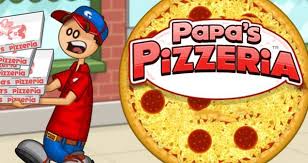
That’s the feeling I still remember from playing Papa’s Pizzeria years ago.
At first glance, it’s an extremely simple time-management game. Take orders, add toppings, bake pizzas, cut slices, repeat. Nothing about it sounds emotionally powerful. Yet people kept returning to it after school, during boring weekends, or late at night while pretending to do homework. Even now, long after the browser-game era faded, games built on similar systems still work for the exact same reason.
They quietly train your brain into caring about tiny responsibilities.
The Strange Satisfaction of Doing Repetitive Tasks Well
Most games try to make players feel heroic. Cooking games usually do the opposite. They make you feel busy.
That’s part of why Papa’s Pizzeria worked so well.
The gameplay loop is almost painfully ordinary. A customer arrives. You write down the order. You spread sauce, place toppings carefully, slide the pizza into the oven, then cut it into equal slices before serving it. You repeat this process dozens of times in one session.
Objectively, it should become boring after ten minutes.
Instead, something strange happens around the thirty-minute mark. You stop noticing the repetition and start noticing efficiency. You begin optimizing movements without realizing it. Suddenly you’re memorizing baking times and mentally organizing customer queues like a stressed restaurant manager.
The game never tells you to care this much. It just quietly rewards precision.
A pizza cut slightly unevenly? Lower score.
Too much time in the oven? Angry customer.
Pepperoni placement messy? There goes your tip.
Tiny systems stack together until your brain starts chasing perfection.
That’s the same psychological trick used in modern “cozy” management games, even if the presentation is completely different. Whether it’s farming simulators, café games, or shop management titles, the satisfaction usually comes from reducing chaos into rhythm.
You stop playing for rewards and start playing because the process itself feels good.
Stress That Feels Manageable
What made Papa’s Pizzeria different from many modern games was the scale of its stress.
Everything felt urgent, but never catastrophic.
You could absolutely ruin an order. You could forget pizzas in the oven while another customer stared impatiently at the counter. But the consequences stayed small enough that failure felt funny instead of punishing.
That balance matters more than people think.
A lot of modern games overload players with progression systems, battle passes, currencies, and endless notifications. Older browser games had limitations that accidentally made them cleaner experiences. Papa’s Pizzeria had one core idea: manage increasing pressure without losing control.
That simplicity made the stress understandable.
There’s also something psychologically satisfying about visible task completion. Every order in the game moves through clear stages:
- Taking the order
- Building the pizza
- Baking it correctly
- Cutting and serving
Your brain gets constant closure.
Modern life rarely works that way. Most real responsibilities stay unfinished for days or months. Emails pile up. Projects evolve endlessly. But in cooking games, every completed order feels final. Done. Resolved. One more problem handled successfully.
That tiny sense of closure becomes addictive surprisingly fast.
Why Browser Restaurant Games Feel So Nostalgic
People often talk about nostalgia like it’s entirely about childhood memories, but I think browser games trigger something more specific.
They remind people of low-pressure internet time.
Back then, games like Papa’s Pizzeria existed in this strange corner of the web where not everything was monetized aggressively. You opened a browser, clicked a game, and started playing within seconds. No updates. No launchers. No massive downloads waiting in the background.
There was very little friction.
That simplicity became part of the emotional memory.
A lot of players remember sneaking these games onto school computers during free periods or playing while listening to music on another tab. The games themselves were repetitive, but they became attached to routines and environments people still remember vividly.
That’s probably why modern indie developers keep recreating elements of old Flash-era design. Even newer cooking games often borrow the same escalating workflow structure because it creates a familiar emotional rhythm.
You can see traces of it in games discussed in [our breakdown of relaxing management loops], or even in [why repetitive gameplay sometimes feels comforting instead of boring].
The nostalgia isn’t only about the art style. It’s about remembering when games felt small enough to fit naturally into everyday life.
Tiny Mechanics Create Real Habits
One thing Papa’s Pizzeria understood surprisingly well was habit formation.
Not in a manipulative mobile-game way. More in the sense that consistent feedback shapes behavior quickly.
You learn patterns fast because the game constantly evaluates your actions.
Customers react immediately. Scores appear instantly. Better performance leads to larger tips. Your brain starts linking careful behavior with reward almost unconsciously.
Over time, players develop weirdly specific habits:
- Checking the oven constantly
- Mentally timing pizzas without looking
- Prioritizing complicated orders first
- Arranging toppings symmetrically even when unnecessary
None of this matters outside the game, obviously. Yet while playing, those habits feel deeply important.
That’s the power of small gameplay systems working together cleanly.
A lot of modern games mistake complexity for depth. Papa’s Pizzeria didn’t have complicated mechanics. It just had mechanics that interacted clearly. Every station affected customer satisfaction, and every mistake had visible consequences.
Because of that clarity, improvement felt tangible.
You could genuinely feel yourself becoming faster and more organized after a few sessions.
The Quiet Appeal of Customer Satisfaction
I think one underrated part of cooking games is how much they rely on emotional validation.
In Papa’s Pizzeria, customers react to your work constantly. Their expressions change. Their scores matter. Their tips become tiny signs of approval.
That sounds insignificant until you realize how motivating it becomes.
Even when customers are fictional cartoons, players still want them to leave happy.
There’s probably something deeply human underneath that. People naturally enjoy taking chaotic situations and making them run smoothly for others. Restaurant games simplify that instinct into something clean and measurable.
You serve people correctly. They smile. Numbers go up.
The game creates a miniature world where effort leads directly to visible appreciation. Real life rarely operates that neatly.
Maybe that’s another reason these games stay memorable.
Why Simple Games Often Last Longer Emotionally
Some games impress you once. Others settle into your memory permanently.
Papa’s Pizzeria belongs to the second category for a lot of players because it never tried too hard to become “important.” It wasn’t chasing cinematic storytelling or massive open worlds. It focused entirely on making one repetitive activity feel satisfying for just a little longer than expected.
And somehow that worked.
Years later, many people barely remember specific levels or scores. What they remember is the feeling:
The pressure of hearing another customer enter while two pizzas were still baking.
The relief of perfectly timing three orders in a row.
The irritation of badly placed olives ruining an otherwise flawless pizza.
The oddly peaceful rhythm that appeared once you stopped panicking and started flowing through the routine automatically.
That’s a surprisingly lasting emotional footprint for a game about virtual pizza orders.
Maybe simple management games endure because they reduce life into solvable problems for a while. No huge stakes. No permanent consequences. Just manageable stress, visible progress, and the comforting possibility of getting slightly better every round.
And honestly, maybe that’s enough.
Do you think games like Papa’s Pizzeria would still hit the same way if people discovered them for the first time today, or are they tied too closely to the slower internet era they came from?