










































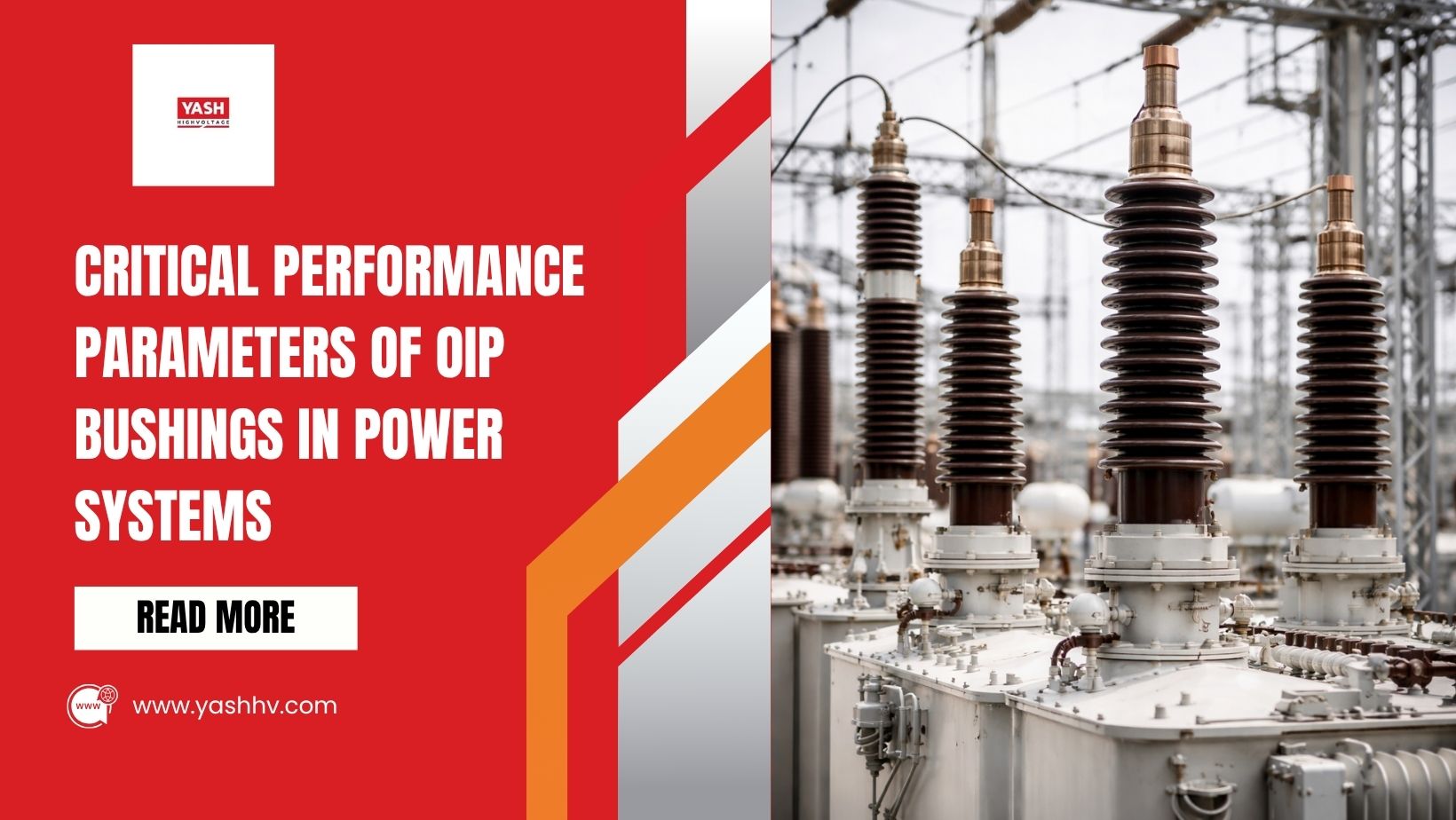
In any high-voltage power system, reliability depends on how well each component performs under electrical and environmental stress. Among these components, OIP (Oil Impregnated Paper) bushings play a quiet but essential role. They act as the interface between energized conductors and grounded equipment, ensuring insulation integrity while allowing current to pass safely.
What often gets overlooked is that the performance of OIP bushings is not defined by a single factor. It is shaped by a combination of electrical, thermal, and mechanical parameters that directly influence long-term reliability. Understanding these parameters helps in making better design, selection, and maintenance decisions.
Dielectric Strength and Insulation Integrity
The primary function of an OIP bushing is insulation. Its dielectric strength determines how effectively it can withstand high voltage without breakdown. The oil-impregnated paper structure is designed to distribute the electric field evenly, reducing stress concentration.
However, this performance depends heavily on the quality of impregnation and the absence of voids. Even minor imperfections can lead to partial discharge activity over time. Maintaining insulation integrity is therefore not just about design, but also about manufacturing precision and handling during installation.
Thermal Performance Under Load Conditions
OIP bushings operate under varying electrical loads, which generate heat. The ability of the bushing to dissipate this heat is a critical performance parameter. Excessive temperature rise can accelerate insulation ageing and reduce service life.
Thermal performance is influenced by:
- Current carrying capacity
- Ambient temperature conditions
- Oil quality and circulation
In real-world operations, bushings are rarely exposed to steady conditions. Load fluctuations can create thermal cycling, which gradually impacts material stability. This makes thermal management a key consideration in both design and application.
Partial Discharge Behaviour
Partial discharge (PD) is one of the earliest indicators of insulation deterioration. In OIP bushings, PD can occur due to internal voids, moisture ingress, or ageing of insulating materials.
Low PD levels are expected in a healthy system. However, a rise in PD activity often signals developing faults that may not be visible externally. Monitoring this parameter helps in identifying issues before they lead to failure.
From a performance perspective, a well-designed OIP bushing should maintain minimal PD levels throughout its operational life, even under stress.
Moisture Content and Oil Quality
Moisture is one of the most critical factors affecting OIP bushings. Since the insulation system relies on oil-impregnated paper, any increase in moisture content can significantly reduce dielectric strength.
Oil acts as both an insulating medium and a cooling agent. Its condition directly impacts performance. Over time, oil can degrade due to oxidation, contamination, or thermal stress.
Regular monitoring of oil quality and moisture levels is essential to maintain consistent performance. Even a small increase in moisture can accelerate insulation ageing and increase the risk of failure.
Mechanical Strength and Structural Stability
While electrical and thermal factors are often discussed, mechanical strength is equally important. OIP bushings must withstand mechanical forces during installation, transportation, and operation.
Factors such as vibration, short-circuit forces, and external impacts can stress the internal structure. A mechanically stable design ensures that the insulation layers remain intact and properly aligned.
In large power systems, where bushings are exposed to dynamic conditions, mechanical reliability becomes a key performance parameter.
Ageing Characteristics Over Time
No insulation system remains unchanged over years of operation. OIP bushings experience gradual ageing due to thermal stress, electrical loading, and environmental exposure.
The rate of ageing depends on:
- Operating temperature
- Load patterns
- Maintenance practices
A well-performing bushing is one that maintains stable characteristics over time without sudden degradation. Predictable ageing behaviour allows utilities to plan maintenance and replacement cycles more effectively.
Environmental Resistance
OIP bushings are often installed in outdoor environments where they are exposed to humidity, pollution, and temperature variations. These external factors can influence performance in subtle but significant ways.
Contaminants can affect external insulation surfaces, while temperature changes can impact internal pressure and oil behaviour. Bushings designed for such conditions must maintain consistent performance despite environmental variations.
Consistency in Manufacturing and Design
One of the less discussed but highly important parameters is consistency. Even small variations in manufacturing can affect performance characteristics such as dielectric strength and PD levels.
High-quality OIP bushings are defined not just by design, but by repeatability in production. Consistent material quality, precise winding of paper layers, and proper oil impregnation all contribute to reliable performance in the field.
Conclusion
OIP bushings may appear to be a standard component in power systems, but their performance is shaped by multiple interdependent parameters. From dielectric strength and thermal behaviour to moisture control and mechanical stability, each factor plays a role in ensuring reliable operation.
A clear understanding of these performance parameters helps engineers, utilities, and system designers make informed decisions. It also highlights the importance of proper selection, monitoring, and maintenance in extending the life of these critical components—an approach consistently reflected in the engineering practices followed at Yash HighVoltage.
For those working closely with high-voltage equipment, focusing on these details can make a measurable difference in system reliability and operational safety.
FAQs
1. What is the most important performance parameter of OIP bushings?
Dielectric strength is the most critical parameter, as it determines the bushing’s ability to withstand high voltage without failure.
2. How does moisture affect OIP bushings?
Moisture reduces insulation efficiency and can lead to partial discharge, accelerating ageing and increasing the risk of breakdown.
3. Why is partial discharge monitoring important in OIP bushings?
It helps detect early insulation defects, allowing preventive action before a major failure occurs.
4. What factors influence the thermal performance of OIP bushings?
Load conditions, ambient temperature, and oil quality all impact how effectively heat is managed.
5. How can the lifespan of OIP bushings be improved?
Regular maintenance, moisture control, and monitoring of oil condition and electrical parameters can significantly extend service life.