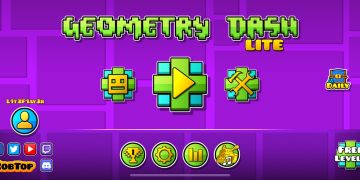































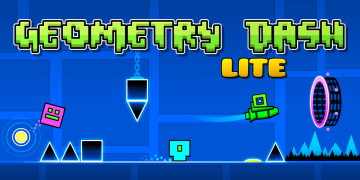



Have you ever stumbled upon a game that, despite its seemingly simple premise, captures your attention and refuses to let go? A game that challenges your reflexes, your timing, and your patience, all while delivering an undeniably satisfying experience? For many, that game is geometry dash. It’s a captivating rhythm-based platformer that has garnered a massive following thanks to its vibrant aesthetics, pulse-pounding soundtracks, and deceptively difficult levels. Whether you’re a seasoned gamer or just looking for a new and engaging way to spend your time, Geometry Dash offers an experience unlike any other.
Introduction to a Square’s Epic Adventure
At its core, Geometry Dash is about guiding a small, geometric icon – typically a cube – through a series of obstacle-filled levels. The game’s beauty lies in its elegant simplicity: the icon moves automatically from left to right, and your only interaction is tapping or clicking to make it jump. This single mechanic, however, is woven into an intricate tapestry of spikes, saws, moving platforms, and gravity-altering portals, all synchronized to the beat of adrenaline-pumping electronic music. The result is a game that feels less like a traditional platformer and more like an interactive musical journey. Each level is a unique composition, with obstacles and hazards appearing in perfect sync with the soundtrack, creating a powerful sense of flow and rhythm. The learning curve is steep, but the satisfaction of finally conquering a particularly challenging section is immense.
The Heart of the Beat: Understanding Gameplay Mechanics
Playing Geometry Dash is an exercise in muscle memory and pattern recognition. While the core mechanic is simple, the game introduces a variety of transformations and game modes that constantly keep you on your toes.
- The Cube: This is your primary form. Tapping makes it jump. Holding down makes it jump higher or continuously if there are multiple platforms.
- The Ship: In ship segments, your icon transforms into a small ship, and tapping controls its altitude. Holding down makes it fly upwards, releasing makes it descend. Navigating tight corridors and avoiding obstacles requires precise control.
- The Ball: The ball flips gravity with each tap. This mode demands quick thinking and anticipating the next flip to avoid falling into traps.
- The UFO: Similar to the ship, the UFO jumps with each tap, but its movement is more floaty and less direct, requiring a different approach to timing.
- The Wave: A continuous up-and-down movement is controlled by holding and releasing. This mode is often considered one of the most challenging due to its sensitivity and requirement for constant adjustments.
- The Robot: This form jumps like the cube but can also perform a high jump by holding down the tap, adding another layer of strategic movement.
- The Spider: This eight-legged creature teleports to the next surface with each tap, regardless of gravity. It’s all about precise timing to avoid obstacles in its path.
Beyond these transformations, levels often feature gravity pads, speed changers, and teleportation portals, all designed to disorient you and push your reflexes to their limits. Each level has three secret coins hidden within, offering an extra layer of challenge for completionists. The game also boasts a robust level editor, allowing players to create and share their own devious designs, ensuring an endless supply of fresh content.
Navigating the Gauntlet: Essential Tips for Success
Geometry Dash can be incredibly frustrating at times, but with a few strategies, you can transform that frustration into triumphant satisfaction.
- Practice Mode is Your Best Friend: Don’t be afraid to utilize practice mode. It allows you to place checkpoints throughout the level, letting you focus on specific difficult sections without having to restart from the beginning every time. This is invaluable for learning the timing and patterns.
- Learn the Rhythms: The music is not just background noise; it’s a vital guide. Pay attention to the beat and how it correlates with the obstacles. Often, the optimal time to jump or change gravity will align perfectly with a specific beat or sound effect.
- Start Simple: Don’t jump straight into the hardest levels. Begin with the easier official levels to get a feel for the different game modes and mechanics. Build up your muscle memory and understanding of the game’s physics.
- Watch Others Play: There are countless videos of skilled players completing levels. Observing their strategies and timing can provide valuable insights and help you identify optimal routes.
- Don’t Give Up: Geometry Dash is a game of persistence. You will die hundreds, if not thousands, of times on a single level. Embrace the failures as learning opportunities. Each death brings you closer to understanding the level and eventually conquering it.
- Take Breaks: If you find yourself getting overly frustrated, step away for a bit. A fresh perspective can often make a difficult section seem much easier.
- Customize Your Icon: While purely aesthetic, having an icon and colors you like can make the experience more enjoyable. It’s a small detail, but it adds a personal touch.
- Experiment with Controls: While tapping/clicking is the standard, some players find success with different input methods or even specialized controllers. Find what feels most comfortable and responsive for you.
Conclusion: More Than Just a Game
Geometry Dash is more than just a challenging platformer; it’s a testament to the power of simple mechanics combined with ingenious level design and a killer soundtrack. It teaches patience, resilience, and the immense satisfaction of overcoming seemingly insurmountable obstacles. The vibrant community, the endless user-created content, and the constant drive to improve make it a game that you can keep coming back to, time and time again. So, if you’re looking for a game that will test your limits, push your reflexes, and reward you with an exhilarating sense of accomplishment, then dive into the world of Geometry Dash. You might just find your new favorite obsession.