



































Taking an established store online involves far more than building a website. Existing staff already manage products, pricing, payments, inventory, and customer orders every single day.
This article explains how retailers can reduce risk when adding online sales. It focuses on launch decisions, store continuity, and practical readiness checks. No plan removes disruption completely, but good sequencing helps.
Understand Existing Store Operations Before Choosing Technology
Start by documenting how the store currently manages products, prices, orders, and daily stock. Retail ecommerce implementation should follow those real routines, not replace them blindly.
Online sales also change what employees do each day. Someone must check new orders, confirm availability, and prepare items for customers. Those tasks need clearly named owners before any launch date.
Technology choices come after these answers, not before them. A small store with simple needs may not require a complex platform. Business requirements, rather than trends, should decide which tools the retailer selects.
Decide What the First Ecommerce Release Must Include
A first release needs only what customers and staff require to complete an order. That usually means product browsing, accurate pricing, order acceptance, and realistic fulfilment options.
Advanced integrations should not automatically become requirements that block the first launch. Features like loyalty programs or delivery connections can often follow later. Each deferred feature should still have a clear owner and timeline.
Deferring an integration works only when a reliable manual process exists. For example, deferring inventory synchronization requires another dependable way to track stock. Without that process, customers may order products that are unavailable.
Plan Around the Existing POS System
A point-of-sale system records in-store sales and often holds product, price, and stock data. Online ordering must respect that existing source of information. Ignoring it can create conflicting records between the store and website.
Retailers should decide which system owns prices and stock quantities. Product mapping then connects each store item to its online listing. Any data exchange should be permitted and carefully controlled.
Integration should be planned carefully so the store keeps running normally. Test any connection with sample products before relying on it. A failed synchronization should never stop normal in-store sales completely.
What Asian Basket’s Implementation Can Teach Retailers
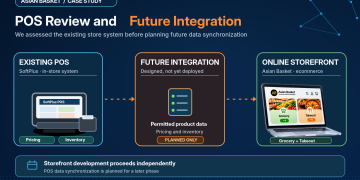
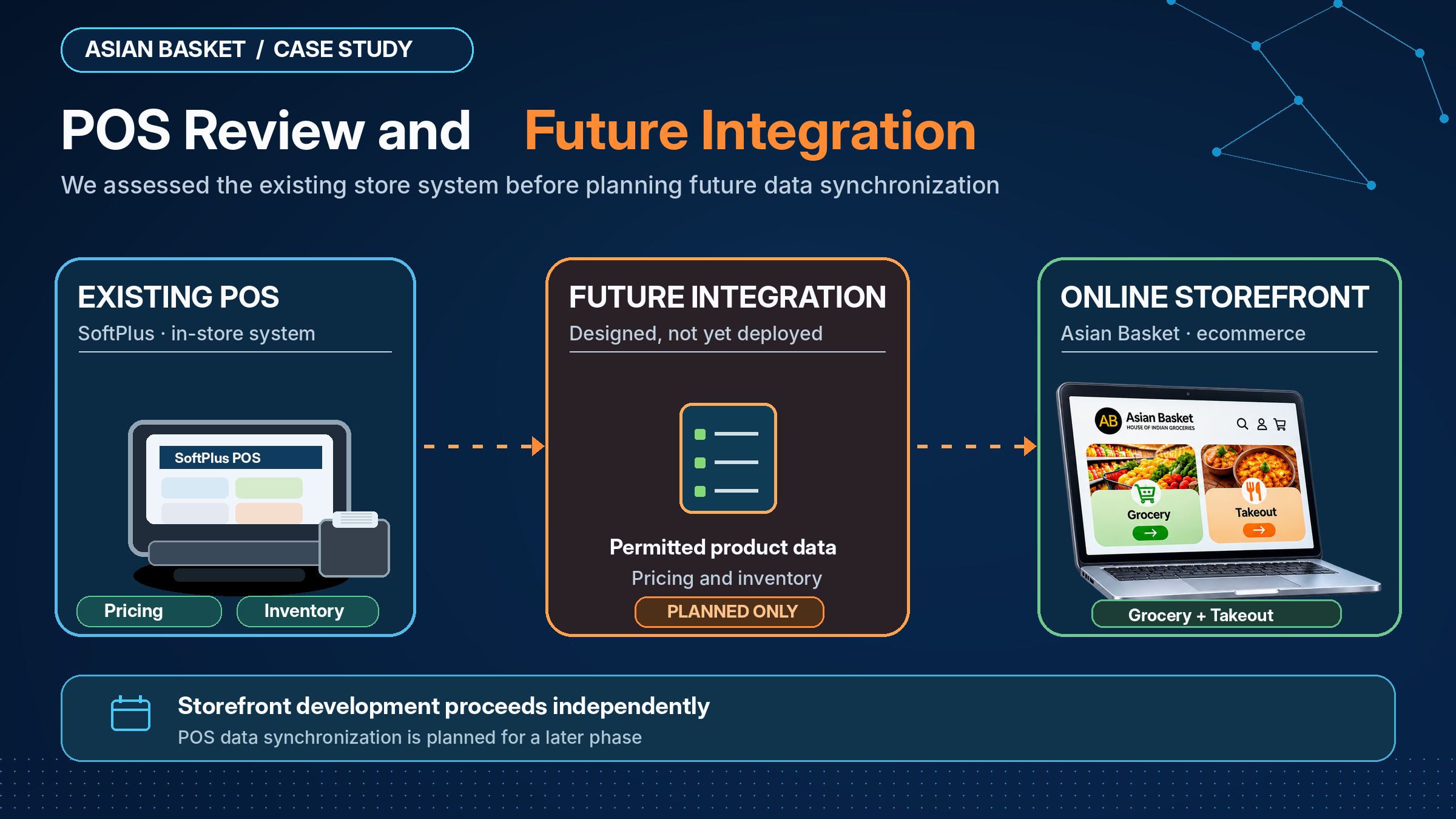
Asian Basket is a grocery and vegetarian takeout business serving Windsor and Essex County. It already used a locally operated SoftPlus POS system for products, pricing, and inventory.
Gyan Solutions designed a headless platform around those existing operating requirements. Medusa handles commerce, Strapi manages content, and Next.js delivers the storefront. Giving each tool one defined role keeps responsibilities easier to manage.
The storefront was designed so it does not depend on finished POS integration. A secure local bridge was planned for permitted data exchange. The Asian Basket implementation case study describes the design further.
Separate Essential Features From Future Improvements
Phased development lets a business launch the parts that matter most first. Asian Basket’s plan places core commerce and content before POS, delivery, and loyalty features.
Those later features remain planned, and this article does not describe them as live. Each future phase should have clear operational requirements before any development begins.
Phased delivery is not automatically cheaper, faster, or more successful than a full launch. It adds coordination work and temporary manual processes that need attention. It suits retailers who value controlled risk over speed.
Test Operational Readiness Before Accepting Orders
Before accepting orders, check that product details and prices are correct. Confirm that pickup times are realistic for the store’s actual capacity. Staff should also understand exactly who handles each order step.
Test failed orders and unavailable products as carefully as successful orders. Check how customers receive updates when something changes or cannot be fulfilled. These are recommended checks, not verified Asian Basket testing activities.
Define What Success Looks Like After Launch
Launching a website does not demonstrate commercial success by itself. Retailers should define measures before launch, then review them regularly. Useful measures include order accuracy, fulfilment reliability, cancellations, and staff workload.
These are suggested measures, not documented Asian Basket results. The case study describes architectural outcomes, and sales or time-saving figures need post-launch measurement. Any retailer should apply the same caution to its own results.
Build Ecommerce Around the Business, Not the Platform
Operational priorities, rather than platform features, should decide how a retailer sequences ecommerce work. Headless architecture suits some businesses, but not every retailer needs it for ecommerce.
Before planning the next implementation, write down what must work on launch day. Then list what can safely wait and who will own each interim process.