































![Top 5 Places to Commission a Custom Dining Table in Dubai [2026]](https://insidethenation.com/wp-content/uploads/2026/08/2151037464-360x180.jpg)












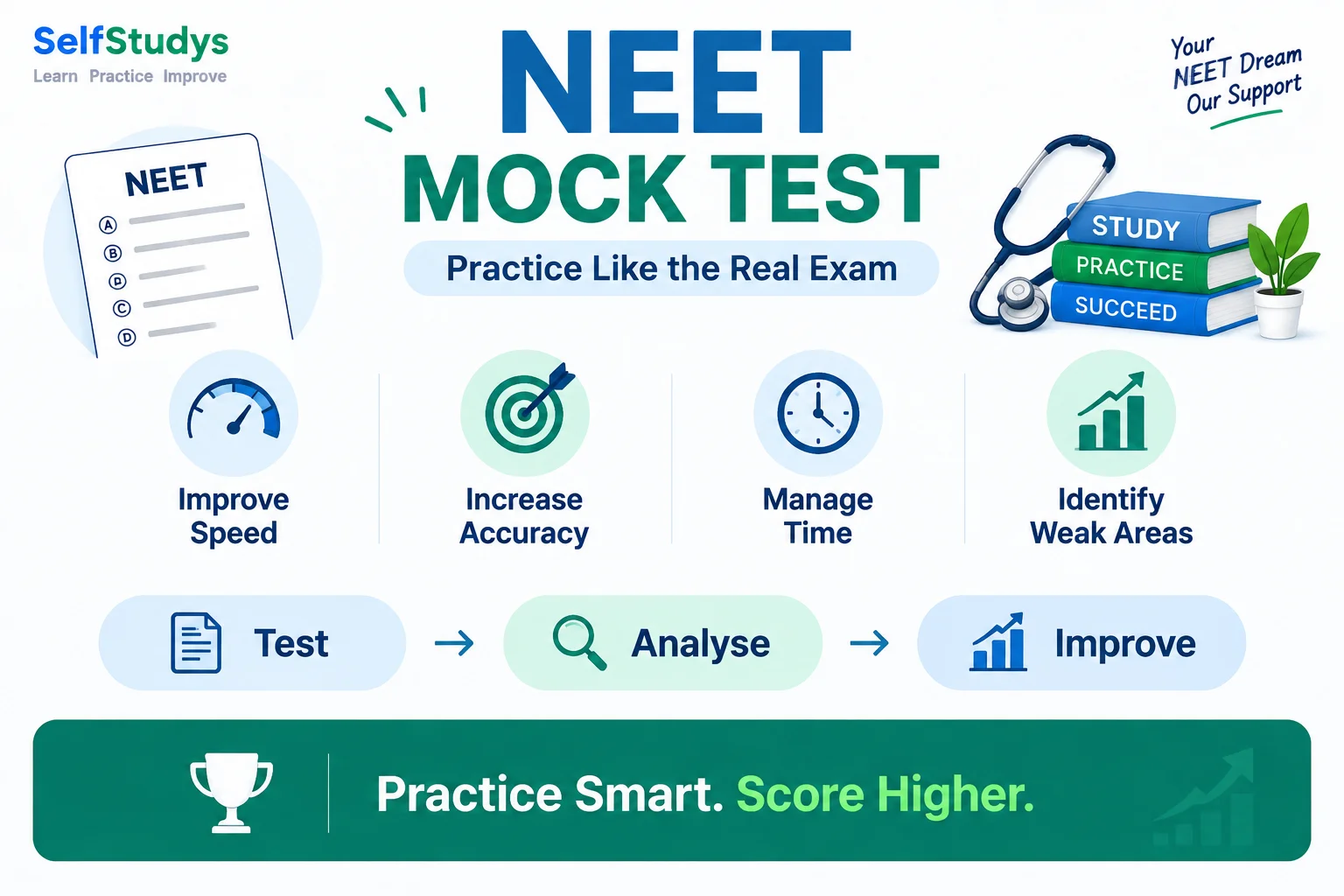
While many NEET candidates take a great number of mock examinations, not everyone takes full advantage of them. Generally, one completes the mock test, analyzes the result, feels some sort of reaction to it, and proceeds to the next test, thus losing a lot of the potential value of it.
A mock exam is a very efficient tool within the process of preparation, however, only if it is productive. And productivity does not mean a good score in the mock; rather, it means how much you learn. Below you will find recommendations on how to make each mock productive.
Look at a Mock Exam as a Session, Not as a Test
Firstly, it is necessary to change your attitude towards mock exams a bit. Not only are they productive as such, but they are productive if they are properly conducted. And a NEET Mock Test is not just one hour spent on it, it is a whole three-part session consisting of pre-, during-, and post-exam work. Most aspirants concentrate on just one of these parts. It is all three that are productive.
If all the steps of the session are properly fulfilled, one mock exam will provide you with more instructional value than several unproductive attempts.
Pre-Mock Preparation: Set Up Right Conditions
The effectiveness of your mock depends on the way you conduct it, and proper preparation is necessary before it starts.
Take each NEET mock in real exam conditions (three hours, silent room, absence of mobile devices, without breaks, and without any help), define what your objective with this mock is (testing a new sequence of attempts, checking how the recent revisions worked out, or testing improved question selection, etc.)—and you will have a better and sharper session overall.
During the Mock: Keep Your Focus
This part of the session has to produce honest, meaningful data, and this requires treating the mock as the real examination.
Stay focused on your task, use the previously prepared strategy for testing, regulate your time on all three subjects, and pinpoint the difficult points. Do not give into the temptations to check your answers during the mock and to stop working because of poor performance—you will need to have the exam temperament on the real test day.
Post-Mock Analysis: Evaluate Thoroughly—Productivity Lays Here
Among the three, this part is the deciding factor for productive performance. While taking the test takes about twenty percent of its value, the analysis takes about eighty percent.
After every mock, dedicate yourself enough time (two or three hours for a complete paper) to analyze the results. Look at your wrong answers, guesses that have helped you, questions that took too long, and questions that you did not answer. For each problem, get its meaning and what to do about it. A mock that was not analyzed thoroughly is wasted, regardless of how seriously it was taken.
Put a Purpose into Each Mock
An unstructured mock gives you unstructured information. The most productive aspirants put a special purpose into every mock.
For one session, it could be checking out a new attempt sequence; for another one, stricter negative-marking discipline; for another one, to see if the improved weak point really got improved. Having a special purpose for every mock will result in clear conclusions, that will make your progress deliberate. This structuring is what separates productive preparation from random scores.
Leave Enough Time Between Mocks
Taking mocks one after another very fast makes you unable to apply your insights, thus making the whole thing pointless. Productivity presupposes some time interval.
Make sure you have enough time between your mocks to analyze the previous one and to implement your changes. A mock every few days and some thorough learning are better than a daily mock that is not further processed. The time interval between mocks is one of the places where you can improve yourself.
Get a Main Insight Out of Every Mock
Your analysis may provide you with a lot of small insights, and that can be confusing. So, in addition to comprehensive evaluations, try to find one main takeaway of every mock.
For example, “I am losing a lot of marks through probabilistic guessing in Physics” or “I always have time problems in Chemistry.” Fixing just one problem on each mock helps to move forward steadily and is more efficient than trying to fix all the deficiencies at once without having enough effect.
Keep an Error Log to Enhance Gains
In order to keep the productivity going in your mock exams, keep an error log of topics and mistakes that make you lose points during your mocks.
By looking at the log that reflects several mocks, you will see the patterns of mistakes that would not be revealed by just one examination. Checking the log before each new mock will ensure that you will be moving forward in your tests, not repeating your mistakes.
Do the Same with NEET Past Year Question Papers
All the recommendations mentioned above can be used for real examinations as well. Approach the NEET Previous Year Question Papers with the same pre-during-post attitude—try to reproduce the real conditions, keep your full focus, and do a thorough analysis. Since past papers are a representation of real examination, a productively analyzed past paper is one of the most valuable forms of practice.
The Bigger Picture
Productive mock exams usage is a form of a deliberate learning habit rather than just doing some effort. Together with your educational background, it will help you pass demanding examinations. Once mastered, this approach will bring you some additional benefits beyond NEET.
Conclusion
Just taking a mock examination does not guarantee any benefit. In order to make each of your NEET mock productive, treat it as a whole session—try to reproduce the real conditions, define a purpose, keep your focus, and make a thorough post-examination analysis.
Assign a special purpose for each of your mocks, leave enough time interval between them, derive one main takeaway from each session, and keep an error log to consolidate your gains.