













































The Internal App Nobody Budgets For Properly — Until It Becomes Essential
Every growing business eventually accumulates a category of mobile software that rarely gets the strategic attention it deserves: the internal, workforce-facing applications that field teams, warehouse staff, sales reps, and operations managers depend on daily. These apps don’t generate direct revenue the way a consumer product does, so they’re frequently built as an afterthought — a quick internal tool thrown together to solve an immediate problem. Then the business grows, the workforce using that tool grows with it, and suddenly an app built without architectural forethought is the single point of failure for daily operations across hundreds or thousands of employees on both iPhones and Android devices.
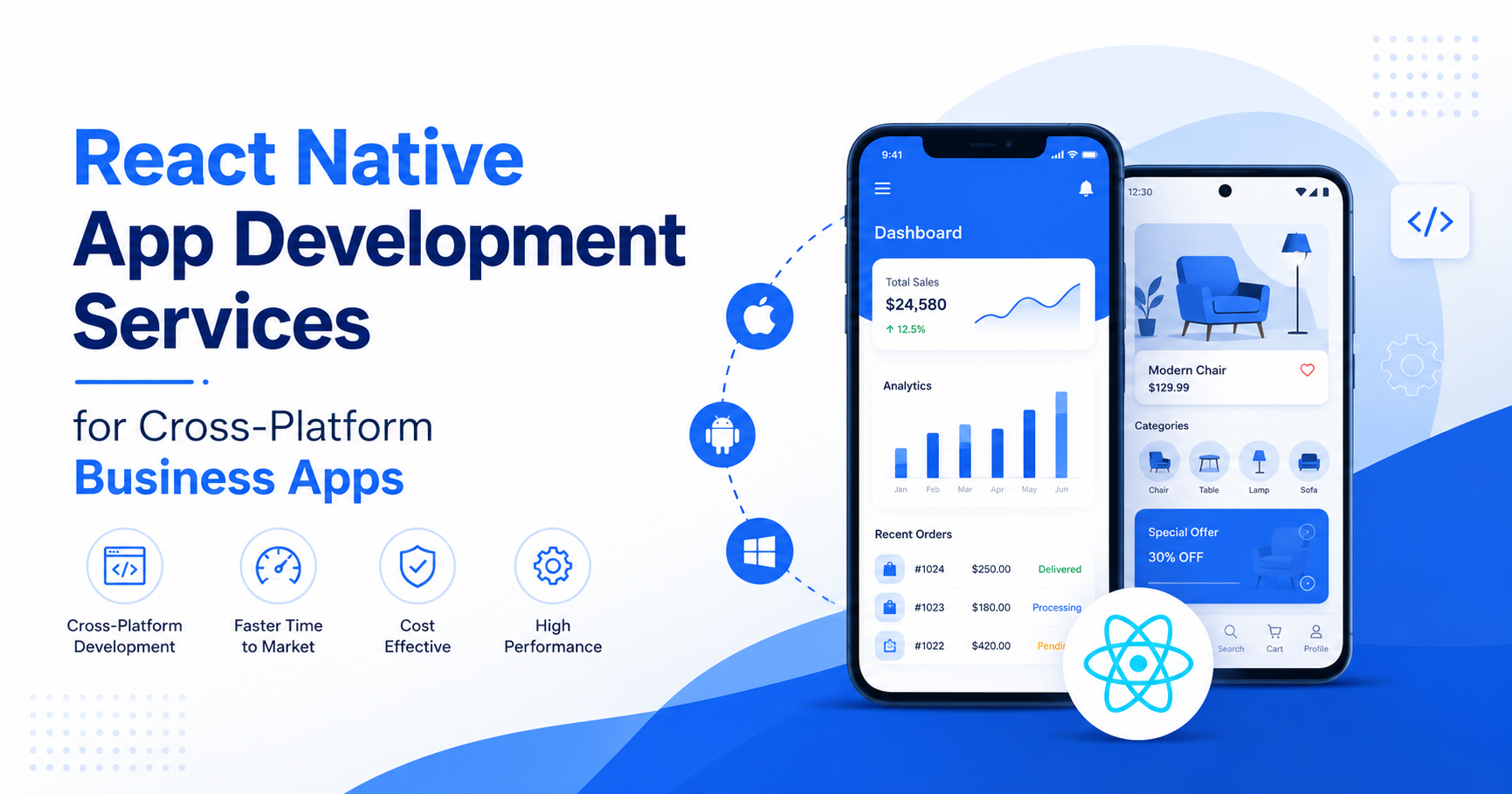
This is exactly the scenario where React Native earns its place as the default starting point for business application strategy rather than a consumer-app-only technology choice. Internal and B2B-facing applications almost universally need to run on both iOS and Android — your workforce doesn’t standardize on a single device platform, and your enterprise clients certainly don’t. A capable React native app development company building business applications on this foundation delivers the dual-platform coverage that workforce and partner-facing tools require, without the doubled engineering investment that building two separate native business apps would demand. This is precisely the gap that properly scoped React Native app development services are designed to close, and it’s a use case that often gets overlooked when businesses think about mobile app development services purely through a consumer-product lens. Understanding why this matters specifically for business applications — as distinct from consumer products — is the focus of what follows.
Why Business Apps Have Different Requirements Than Consumer Apps
Consumer-facing mobile products are typically evaluated on user delight, conversion optimization, and competitive differentiation. Business and enterprise applications are evaluated on a different set of priorities entirely: reliability under real operational conditions, ease of deployment and updates across a managed device fleet, integration depth with existing business systems, and total cost of ownership over years of operational use. These differences matter enormously when choosing a development approach, because what makes sense for a consumer app doesn’t automatically translate to the right choice for an internal business tool.
React native app development services align particularly well with these business application priorities. The shared codebase model directly reduces total cost of ownership for tools that need ongoing maintenance over years of internal use, not just an initial launch. The mature ecosystem of pre-built libraries for forms, offline data sync, camera and barcode scanning, and enterprise authentication accelerates the kind of functionality that internal business tools depend on heavily. And the over-the-air update capability through CodePush or EAS Update means critical bug fixes and workflow changes can reach your entire workforce instantly, without the device-by-device manual update process that plagues poorly managed business app deployments. The specific business application priorities where React Native delivers measurable advantages:
- Lower total cost of ownership — a single codebase maintained over years of operational use accumulates dramatically lower lifetime maintenance cost than parallel native codebases requiring duplicate updates for every workflow change
- Faster deployment of operational changes — when a business process changes, the corresponding app update ships to the entire workforce simultaneously rather than rolling out to one platform while the other lags behind
- Integration-first ecosystem — mature libraries for connecting to ERP systems, CRM platforms, barcode and QR scanning, and enterprise authentication (SSO, Active Directory) reduce custom development effort for the integrations business apps depend on most
- Offline-first capability as standard practice — field service, warehouse, and logistics applications routinely need to function without connectivity, and React Native’s offline-first architecture patterns are well-established and production-proven
- Simplified IT management — a single application codebase is easier for internal IT and operations teams to support, troubleshoot, and request changes against than coordinating two separate native applications
Where Cross-Platform Business Apps Create the Most Operational Value
Not every internal tool needs the same level of investment, but specific categories of business application consistently generate the strongest return from a properly built cross-platform React Native investment. These are typically applications used by distributed workforces — people who aren’t sitting at a desk with a managed laptop, but who are moving through warehouses, driving delivery routes, visiting client sites, or working retail floors, and who need reliable, well-designed mobile tools to do their jobs effectively.
A professional React native app development agency with business application experience recognizes that these tools, while internal, deserve the same UX rigor as consumer products — because a clunky internal tool that frustrates your workforce produces real operational cost in the form of errors, workarounds, and the kind of employee frustration that affects retention. This is exactly where dedicated UI UX design services for internal tools pay off disproportionately — a warehouse worker fighting a confusing interface under time pressure makes more mistakes than one using a thoughtfully designed tool. The categories of business application where cross-platform investment delivers the clearest operational return:
- Field service and technician apps — work order management, parts inventory lookup, customer signature capture, and photo documentation for service technicians who need reliable performance regardless of which device their employer issued them
- Warehouse and logistics operations apps — barcode scanning, inventory management, pick-and-pack workflows, and delivery confirmation tools that need to function reliably in environments with poor connectivity and rugged usage conditions
- Sales enablement and CRM companion apps — mobile access to customer data, order entry, and pipeline updates for sales teams who need their tools to work identically whether they’re issued an iPhone or an Android device
- Retail and point-of-sale companion tools — inventory checks, customer loyalty lookups, and staff scheduling tools that need to run consistently across the mixed device fleets that retail operations typically manage
- Healthcare and field clinical apps — patient visit documentation, care coordination, and clinical data capture for home health and field clinical staff working across varied device environments
Integration Depth: The Real Test of Business App Quality
The defining quality test for a business application isn’t visual polish — it’s how cleanly the app integrates with the systems your business already runs on. An internal tool that looks great but requires manual data re-entry into your ERP or CRM has solved only part of the problem and created a new one: a second system of record that inevitably drifts out of sync with the first. This integration depth is where the difference between a genuinely capable React native app development company in India and a team with only surface-level React Native familiarity becomes immediately apparent.
Strong business application development treats integration architecture as a first-class concern from the earliest planning stages, not an afterthought addressed once the UI is built. This means designing clean API layers that connect to existing enterprise systems, implementing robust error handling for the inevitable connectivity issues that field and warehouse environments present, and building data synchronization logic that correctly handles conflicts when the same record is modified both offline and on a connected device elsewhere. The integration capabilities that distinguish genuinely production-ready business applications:
- Enterprise system API integration — clean, well-tested connections to ERP, CRM, inventory management, and other systems of record that the business already depends on, avoiding the data duplication and drift that poorly integrated tools create
- Single sign-on and enterprise authentication — integration with Active Directory, Okta, or other enterprise identity providers so employees use the same credentials across all business tools rather than managing yet another separate login
- Robust offline sync and conflict resolution — data architecture that gracefully handles the reality of field workers operating without connectivity for extended periods, then correctly reconciling changes once connection is restored
- Audit logging and compliance tracking — for regulated industries, the ability to track who made what change and when, built into the application architecture rather than retrofitted under audit pressure
- Device and MDM management compatibility — integration with enterprise mobile device management platforms that IT departments use to deploy, secure, and monitor business applications across a managed device fleet. This level of operational reliability depends on ongoing app maintenance services that keep the application current with OS updates, security patches, and evolving integration requirements long after the initial launch
India and USA: Sourcing Business Application Expertise
The decision about where to source React Native development talent for business applications carries specific considerations distinct from consumer app development. React native app development company in India providers have built extensive experience with the enterprise integration patterns — ERP connections, legacy system bridging, complex authentication flows — that business applications depend on heavily, developed through years of serving enterprise clients across manufacturing, logistics, healthcare, and financial services. This integration-heavy experience is precisely the skill set that consumer app portfolios don’t always demonstrate, making it worth specifically verifying during partner evaluation.
A React native app development company in USA brings complementary value for business applications targeting North American enterprise environments specifically — familiarity with US enterprise IT security review processes, compliance requirements relevant to regulated industries, and the procurement and vendor management expectations that US enterprise buyers typically have. For many businesses, the most effective model combines both: US-based product and security architecture leadership working alongside India-based engineering teams with deep integration experience, delivering business applications that satisfy both technical depth and enterprise procurement requirements simultaneously. What each geography contributes to business application development specifically:
- India-based strengths for business apps: extensive enterprise integration experience, ERP and legacy system connectivity expertise, cost structures that make sustained internal tool maintenance financially sustainable over years
- USA-based strengths for business apps: enterprise security review familiarity, compliance and regulatory fluency for industries like healthcare and finance, direct alignment with US enterprise procurement expectations
- Combined engagement value: architecture and security leadership from US-proximate resources, integration-heavy engineering execution from India-based specialists, producing business applications that satisfy both technical and procurement requirements
Native Mobile Considerations for Specialized Business Use Cases
While React Native serves the vast majority of business application needs effectively, certain specialized use cases genuinely warrant evaluation of native development instead, and an honest development partner will tell you when this is the case rather than defaulting to their preferred technology regardless of fit. A native mobile app development company approach becomes more relevant for business applications requiring deep, specialized hardware integration — industrial scanning hardware with proprietary SDKs, specialized sensor integration in manufacturing environments, or augmented reality overlays for technical field work that push beyond what cross-platform frameworks comfortably support.
The honest evaluation framework for business applications weighs the specific technical requirements against the operational benefits of a unified codebase. Most business applications — even those with barcode scanning, camera capture, and offline sync — fit comfortably within React Native’s capabilities through its mature library ecosystem. The native consideration becomes relevant specifically when proprietary hardware SDKs without React Native bridges are involved, or when the performance demands of the specific use case (industrial AR overlays, real-time sensor fusion) exceed what cross-platform frameworks reliably deliver. When to specifically evaluate native development for business applications:
- Proprietary industrial hardware integration — specialized scanning devices, sensors, or equipment with vendor SDKs that don’t have mature React Native bridge libraries available
- Performance-critical real-time processing — applications requiring real-time sensor fusion, complex computer vision processing, or AR overlays that push beyond standard business application performance requirements
- Highly specialized regulatory hardware certification — medical device companion apps or similarly regulated hardware integrations where certification requirements are tightly coupled to native platform behavior
Closing: Cross-Platform as the Default for Business Application Strategy
For the overwhelming majority of internal tools, field service applications, and B2B-facing business apps, React Native represents the financially and operationally sound default choice — delivering the dual-platform coverage that distributed workforces and enterprise clients require, without the doubled engineering investment and maintenance burden that parallel native development imposes on tools that rarely get the budget attention they deserve relative to their operational importance. The React native app development company in India and React native app development company in USA partners who understand business application requirements specifically — integration depth, offline reliability, enterprise authentication — deliver tools that genuinely support operations rather than becoming the internal app everyone quietly works around. For businesses that need this expertise embedded directly into their own technical team, the option to hire React Native developers on a dedicated basis gives you engineers who carry deep operational context across every internal tool your business depends on. Build your business applications with the same strategic rigor you’d apply to any customer-facing product, because your workforce’s daily experience with these tools matters more to your operational success than most budget conversations acknowledge.